
Translate Italian Menus: Spot Gluten, Dairy & Authentic Dishes
Italy has 300+ pasta shapes and regional dishes you've never heard of. Finally understand what you're ordering.
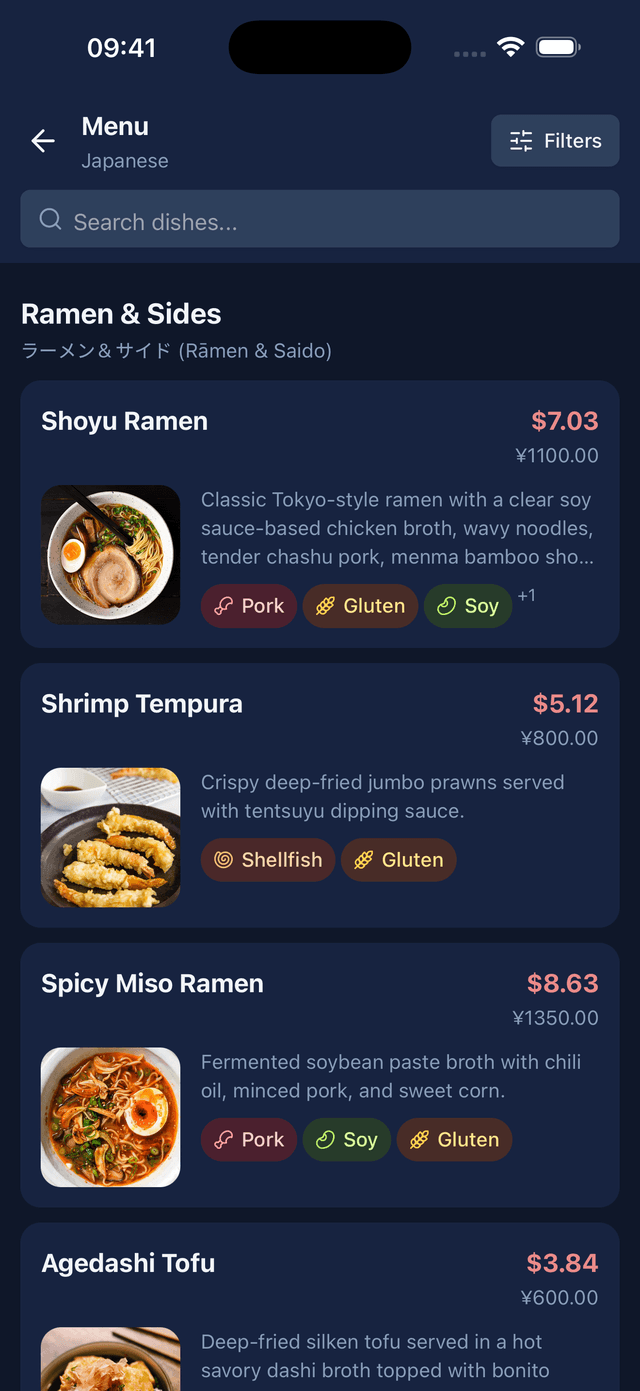
Lost in Pasta Translation?
Regional dialects and specific pasta shapes can be confusing even if you know basic Italian. What's 'Cacio e Pepe'? Is 'Nduja' spicy? MenuVista explains every dish in detail.
- ✗Characters you can't read, dishes you can't identify
- ✗Generic word-for-word translation with zero food context
- ✗No idea what allergens are hiding in the dish
- ✗Pointing at the menu and hoping for the best
- →Every dish translated with real culinary context
- →Ingredients broken down, allergens automatically flagged
- →Full nutritional breakdown before you order
- →Order with confidence in any language, anywhere
Hidden Nuts & Pork Alert
Pesto contains hidden pine nuts. Carbonara has pork (Guanciale). Many 'vegetarian' dishes use meat broth. MenuVista catches these before you order.
Nuts & peanuts
Hidden in sauces, marinades, desserts
Shellfish & seafood
Broths, stocks, and garnishes
Gluten
Soy sauce, marinades, fried dishes
Important safety note
Pesto contains hidden pine nuts. Carbonara has pork (Guanciale). Many 'vegetarian' dishes use meat broth. MenuVista catches these before you order.
Not just translation.
Menu intelligence.
Translation apps were built to convert text. MenuVista was built specifically for the restaurant table.
Know what you're
looking at.
Familiarize yourself with essential italian food vocabulary before your next meal.
Antipasto
ItalianMeaning
Starter course
Primo
ItalianMeaning
First course, usually pasta/risotto
Secondo
ItalianMeaning
Second course, usually meat/fish
Contorno
ItalianMeaning
Side dish
Dolce
ItalianMeaning
Dessert
Risotto
ItalianMeaning
Slow-cooked rice dish
Bruschetta
ItalianMeaning
Toasted bread with toppings
Prosciutto
ItalianMeaning
Dry-cured ham
Gnocchi
ItalianMeaning
Potato dumplings
Parmigiana
ItalianMeaning
Baked with parmesan
Fritto
ItalianMeaning
Fried
Alla griglia
ItalianMeaning
Grilled
Manzo
ItalianMeaning
Beef
Pollo
ItalianMeaning
Chicken
Tartufo
ItalianMeaning
Truffle
Piccante
ItalianMeaning
Spicy
Senza Glutine
ItalianMeaning
Gluten-free
Want to translate the full italian menu?
MenuVista reads the whole thing in seconds.


How to read a italian menu.
Italian menus follow a strict course structure: Antipasti (starters), Primi (pasta/risotto), Secondi (meat/fish), Contorni (sides), and Dolci (desserts). You are not expected to order from every section.
Coperto is a cover charge (€1-3) that appears on your bill — it covers bread and table service and is completely normal, not a scam.
In Italy, a 'latte' is just milk. If you want a coffee with milk, order a 'caffè latte' or 'cappuccino' (but only before 11am — ordering cappuccino after lunch is considered unusual).
Pasta portions in Italy are smaller than abroad because they're a first course, not the main event. Ordering pasta as your only dish is perfectly fine though.
The house wine (vino della casa) is almost always good and significantly cheaper than bottled options. It's usually local and served in a carafe.
Common questions about italian menus.
Can MenuVista distinguish between regional Italian dishes?
Yes. MenuVista understands that 'pizza' in Naples is different from Rome, that 'ragù' varies between Bologna and Naples, and provides region-specific descriptions when available.
How does it handle Italian menu abbreviations?
Italian menus often use abbreviations like 'surg.' (surgelato/frozen) which is legally required. MenuVista flags these so you know which items are frozen vs. fresh.
Does it work with handwritten Italian trattoria menus?
Yes. Many traditional trattorias use handwritten daily menus on chalkboards. MenuVista's OCR handles Italian cursive handwriting effectively.
Can it detect common Italian allergens like pine nuts?
MenuVista flags pine nuts in pesto, anchovies in sauces, eggs in fresh pasta, and dairy in dishes that may not obviously contain them.
Translate more cuisines.
Same confidence.
Translate Italian menus now
Snap the menu, understand every dish, order with confidence. Works for italian menus and 30+ other languages.