
French Menu Translator: Decode Ingredients & Avoid Surprises
French cuisine is elegant but mysterious. Know exactly what you're ordering before it arrives at your table.
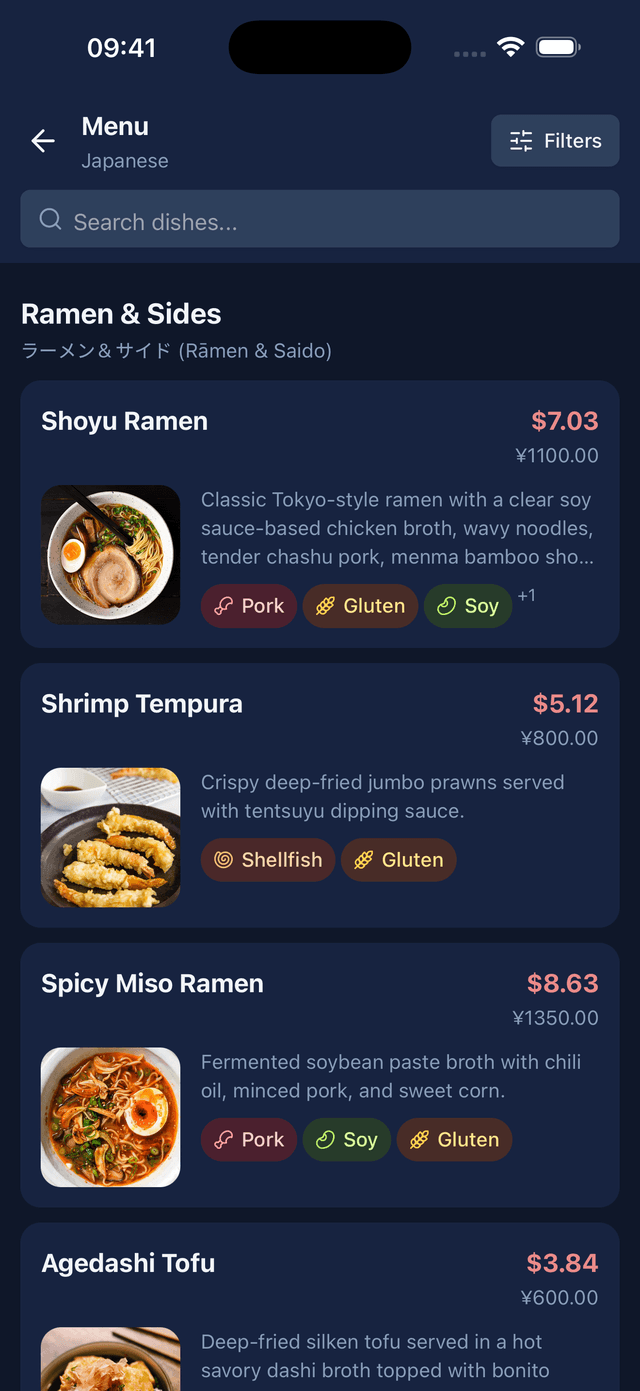
Fancy Name, Surprising Dish?
French cuisine is full of complex terms. 'Ris de Veau' sounds fancy, but it's Sweetbreads (Glands). 'Andouillette' looks like sausage but smells like... something else. MenuVista tells you what's really on your plate.
- ✗Characters you can't read, dishes you can't identify
- ✗Generic word-for-word translation with zero food context
- ✗No idea what allergens are hiding in the dish
- ✗Pointing at the menu and hoping for the best
- →Every dish translated with real culinary context
- →Ingredients broken down, allergens automatically flagged
- →Full nutritional breakdown before you order
- →Order with confidence in any language, anywhere
Butter & Cream Everywhere
French cooking loves butter, cream, and eggs. Hidden dairy is in almost every sauce. MenuVista filters these out instantly for lactose-intolerant travelers.
Nuts & peanuts
Hidden in sauces, marinades, desserts
Shellfish & seafood
Broths, stocks, and garnishes
Gluten
Soy sauce, marinades, fried dishes
Important safety note
French cooking loves butter, cream, and eggs. Hidden dairy is in almost every sauce. MenuVista filters these out instantly for lactose-intolerant travelers.
Not just translation.
Menu intelligence.
Translation apps were built to convert text. MenuVista was built specifically for the restaurant table.
Know what you're
looking at.
Familiarize yourself with essential french food vocabulary before your next meal.
Entrée
FrenchMeaning
Starter, NOT main course
Plat
FrenchMeaning
Main course
Fromage
FrenchMeaning
Cheese course
Dessert
FrenchMeaning
Sweet course
Confit
FrenchMeaning
Slow-cooked in fat
Gratin
FrenchMeaning
Baked with crispy topping
Tartare
FrenchMeaning
Raw, finely chopped
Velouté
FrenchMeaning
Smooth cream soup
Croque
FrenchMeaning
Toasted sandwich
Braisé
FrenchMeaning
Braised
Fumé
FrenchMeaning
Smoked
Rillettes
FrenchMeaning
Potted meat spread
Volaille
FrenchMeaning
Poultry
Boeuf
FrenchMeaning
Beef
Poisson
FrenchMeaning
Fish
Cru
FrenchMeaning
Raw
Ris
FrenchMeaning
Sweetbreads
Want to translate the full french menu?
MenuVista reads the whole thing in seconds.


How to read a french menu.
A French 'entrée' is a starter, not a main course. The main dish is called 'plat principal' or just 'plat'. This catches out most English speakers.
The prix fixe (fixed price) menu is almost always the best value — it includes 2 or 3 courses at a set price and often features the chef's best dishes of the day.
Cheese comes BEFORE dessert in France, not after. If the waiter asks 'fromage ou dessert?', they're asking which you prefer — though many restaurants let you have both.
Water is free in France. Ask for 'une carafe d'eau' (a carafe of tap water) instead of buying bottled water. This is a legal right.
Lunch service (déjeuner) typically runs 12:00-14:00 and dinner (dîner) from 19:30-22:00. Arriving outside these hours means most kitchens will be closed.
Common questions about french menus.
Can MenuVista handle French cursive menu handwriting?
Yes. Many bistros and brasseries use chalkboard menus with cursive handwriting. MenuVista's AI is trained to recognize French culinary handwriting.
How does it translate French cooking techniques?
Rather than literal translation, MenuVista explains techniques like 'confit', 'braisé', and 'en croûte' with descriptions of what the dish actually looks and tastes like.
Does it detect dairy in French cuisine?
French cooking uses butter and cream extensively. MenuVista flags dishes containing beurre (butter), crème (cream), and fromage (cheese), even when not explicitly listed.
Can it read the daily specials board (ardoise)?
Yes. The 'ardoise' or daily specials chalkboard is common in French restaurants. MenuVista reads and translates these with full food context.
Translate more cuisines.
Same confidence.
Decode French menus now
Snap the menu, understand every dish, order with confidence. Works for french menus and 30+ other languages.