
Translate Chinese Menus: Decode Characters & Spot MSG
Chinese menus can have 100+ dishes with characters you can't read. Get instant translations with photos and allergen alerts.
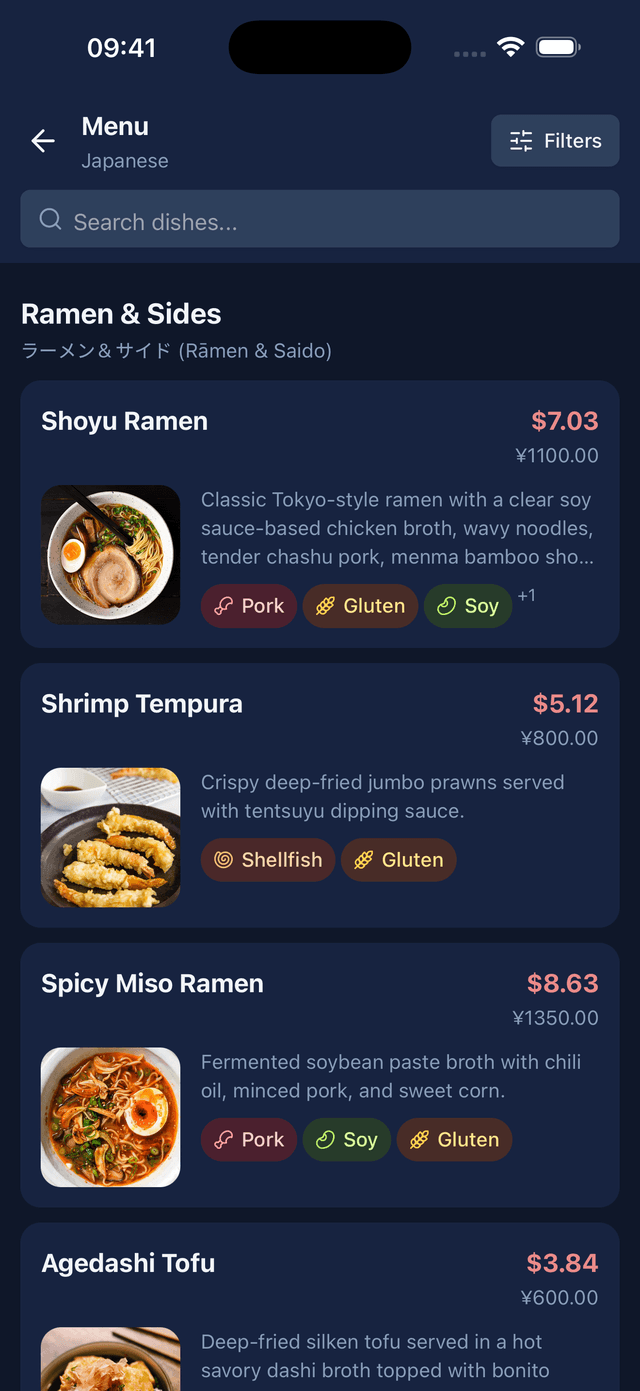
Overwhelmed by Characters?
Chinese has thousands of characters, and regional cuisines (Sichuan, Cantonese, Hunan) are completely different. Dim sum trolleys move fast. MenuVista gives you instant translations so you never miss a dish.
- ✗Characters you can't read, dishes you can't identify
- ✗Generic word-for-word translation with zero food context
- ✗No idea what allergens are hiding in the dish
- ✗Pointing at the menu and hoping for the best
- →Every dish translated with real culinary context
- →Ingredients broken down, allergens automatically flagged
- →Full nutritional breakdown before you order
- →Order with confidence in any language, anywhere
Hidden Shellfish & Soy Alerts
Oyster sauce, shrimp paste, and soy are in countless Chinese dishes. Sesame hides in sauces. MSG is common. MenuVista flags all of these before you order.
Nuts & peanuts
Hidden in sauces, marinades, desserts
Shellfish & seafood
Broths, stocks, and garnishes
Gluten
Soy sauce, marinades, fried dishes
Important safety note
Oyster sauce, shrimp paste, and soy are in countless Chinese dishes. Sesame hides in sauces. MSG is common. MenuVista flags all of these before you order.
Not just translation.
Menu intelligence.
Translation apps were built to convert text. MenuVista was built specifically for the restaurant table.
Know what you're
looking at.
Familiarize yourself with essential chinese food vocabulary before your next meal.
炒 (Chǎo)
ChineseMeaning
Stir-fried
蒸 (Zhēng)
ChineseMeaning
Steamed
烤 (Kǎo)
ChineseMeaning
Roasted/grilled
煮 (Zhǔ)
ChineseMeaning
Boiled
麻辣 (Málà)
ChineseMeaning
Numbing-spicy
宫保 (Gōngbǎo)
ChineseMeaning
Kung Pao style
饺子 (Jiǎozi)
ChineseMeaning
Dumplings
面 (Miàn)
ChineseMeaning
Noodles
汤 (Tāng)
ChineseMeaning
Soup
豆腐 (Dòufu)
ChineseMeaning
Tofu
鸡 (Jī)
ChineseMeaning
Chicken
牛 (Niú)
ChineseMeaning
Beef
虾 (Xiā)
ChineseMeaning
Shrimp
辣 (Là)
ChineseMeaning
Spicy
素 (Sù)
ChineseMeaning
Vegetarian
Want to translate the full chinese menu?
MenuVista reads the whole thing in seconds.


How to read a chinese menu.
Chinese menus are enormous — 100+ items is normal. Dishes are organized by main ingredient (pork, beef, seafood, vegetables) and cooking method.
The same dish name can taste completely different across China's eight major regional cuisines. Sichuan is fiery, Cantonese is subtle, Shanghainese is sweet.
Cold dishes (凉菜, liángcài) come first and are meant to be appetizers. Don't skip them — they're often the most interesting part of the menu.
When the menu says '时价' (shíjià, market price), it means the price changes daily. Always ask before ordering to avoid surprise bills, especially for seafood.
Tea is usually free and refilled endlessly. If you want the teapot refilled, leave the lid slightly open — this is the traditional signal.
Common questions about chinese menus.
Can MenuVista handle Simplified and Traditional Chinese?
Yes. MenuVista reads both Simplified Chinese (mainland) and Traditional Chinese (Taiwan, Hong Kong) characters and translates both accurately.
How does it handle regional Chinese cuisine names?
MenuVista recognizes regional variations — it knows that 锅包肉 (Guōbāoròu) is a Northeastern dish, 小笼包 (Xiǎolóngbāo) is Shanghainese, and provides regional context.
Does it detect MSG and common Chinese allergens?
MenuVista flags MSG, peanuts (common in Kung Pao and many sauces), sesame oil, soy sauce, and shellfish-based ingredients in Chinese dishes.
Can it read Chinese menu photos with decorative fonts?
Yes. Chinese menus often use stylized or calligraphic fonts. MenuVista's OCR is trained on a wide variety of Chinese typography.
Translate more cuisines.
Same confidence.
Translate Chinese menus now
Snap the menu, understand every dish, order with confidence. Works for chinese menus and 30+ other languages.