
Translate Thai Menus: Control Spice Levels & Spot Peanuts
Thai script is beautiful but impossible to read. Get instant translations with spice warnings and allergen alerts.
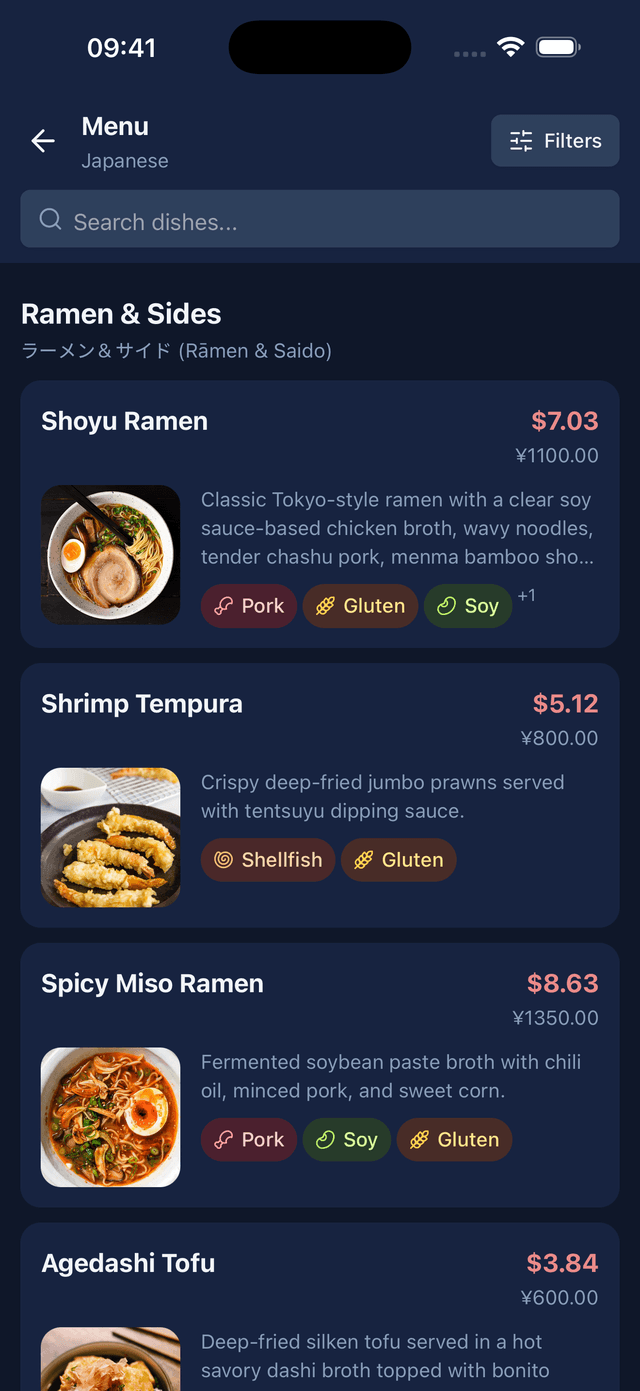
Can't Read Thai Script?
Thai uses 44 consonants and 15 vowels in a unique script. Street food stalls rarely have English menus. 'Phet' means spicy, but HOW spicy? MenuVista tells you exactly what to expect.
- ✗Characters you can't read, dishes you can't identify
- ✗Generic word-for-word translation with zero food context
- ✗No idea what allergens are hiding in the dish
- ✗Pointing at the menu and hoping for the best
- →Every dish translated with real culinary context
- →Ingredients broken down, allergens automatically flagged
- →Full nutritional breakdown before you order
- →Order with confidence in any language, anywhere
Peanuts & Fish Sauce Everywhere
Peanuts hide in Pad Thai, satay sauces, and curries. Fish sauce (Nam Pla) is in almost everything. Shrimp paste too. MenuVista catches all of these instantly.
Nuts & peanuts
Hidden in sauces, marinades, desserts
Shellfish & seafood
Broths, stocks, and garnishes
Gluten
Soy sauce, marinades, fried dishes
Important safety note
Peanuts hide in Pad Thai, satay sauces, and curries. Fish sauce (Nam Pla) is in almost everything. Shrimp paste too. MenuVista catches all of these instantly.
Not just translation.
Menu intelligence.
Translation apps were built to convert text. MenuVista was built specifically for the restaurant table.
Know what you're
looking at.
Familiarize yourself with essential thai food vocabulary before your next meal.
ผัด (Pad)
ThaiMeaning
Stir-fried
ต้ม (Tom)
ThaiMeaning
Boiled/soup
แกง (Gaeng)
ThaiMeaning
Curry
ยำ (Yam)
ThaiMeaning
Spicy salad
ข้าว (Khao)
ThaiMeaning
Rice
เส้น (Sen)
ThaiMeaning
Noodles
ไก่ (Gai)
ThaiMeaning
Chicken
หมู (Moo)
ThaiMeaning
Pork
กุ้ง (Goong)
ThaiMeaning
Shrimp
เผ็ด (Ped)
ThaiMeaning
Spicy
ไม่เผ็ด (Mai Ped)
ThaiMeaning
Not spicy
ทอด (Tod)
ThaiMeaning
Deep-fried
ถั่ว (Thua)
ThaiMeaning
Peanuts
Want to translate the full thai menu?
MenuVista reads the whole thing in seconds.


How to read a thai menu.
Thai spice levels are no joke — 'medium' in Thailand is 'very spicy' elsewhere. Ask for 'ไม่เผ็ด' (mai ped, not spicy) or 'เผ็ดนิดหน่อย' (ped nit noi, a little spicy) if you're unsure.
Thai meals are meant to be shared. Order multiple dishes for the table and eat family-style with rice. Ordering one dish per person is common for tourists but not the local way.
Street food in Thailand is often safer than restaurant food because you can see it being cooked fresh. Look for stalls with high turnover — that means fresh ingredients.
Thai dishes often combine sweet, sour, salty, and spicy in one dish. If something tastes 'off' to you, it might just be a flavor profile you're not used to.
Pad Thai is rarely eaten by locals at restaurants — it's considered street food. If a restaurant heavily promotes Pad Thai, it's likely tourist-oriented.
Common questions about thai menus.
Can MenuVista read Thai script accurately?
Yes. Thai script has no spaces between words, making it extremely difficult for generic translators. MenuVista's food-specific AI correctly segments and translates Thai menu text.
How does it handle Thai spice warnings?
MenuVista indicates expected spice levels for each dish and flags extremely spicy items. It also translates how to request spice level adjustments.
Does it detect fish sauce and shrimp paste?
Fish sauce (น้ำปลา) and shrimp paste (กะปิ) are in almost every Thai dish. MenuVista flags these for people with seafood allergies or dietary restrictions.
Can it translate Thai street food stall menus?
Yes. Street food signs and hand-painted menus are fully supported. MenuVista handles the informal Thai text commonly used at food stalls.
Translate more cuisines.
Same confidence.
Scan Thai menus safely
Snap the menu, understand every dish, order with confidence. Works for thai menus and 30+ other languages.