
Translate Indian Menus: Navigate Spice Levels & Spot Hidden Dairy
India has 28 states with distinct cuisines. Finally understand the difference between Korma and Vindaloo.
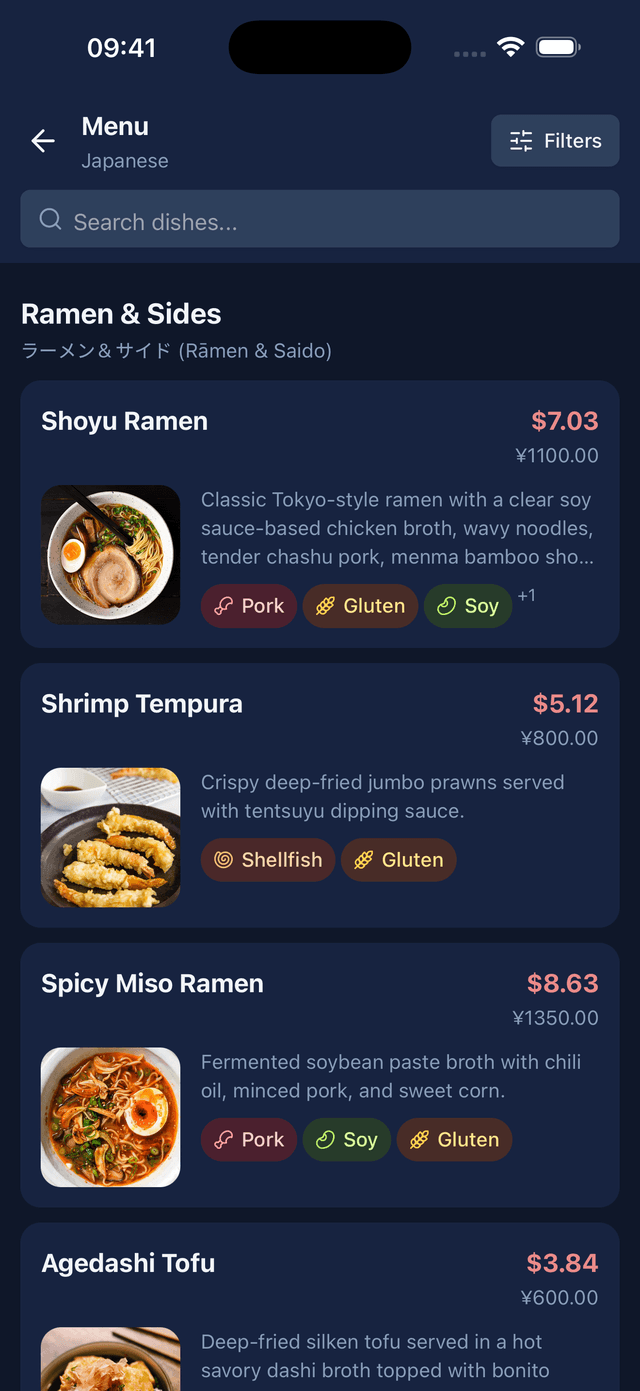
Overwhelmed by Choices?
Indian menus can have 100+ dishes across regions: North Indian tandoori, South Indian dosas, Bengali fish curries. What's mild? What's volcanic? MenuVista explains spice levels and ingredients.
- ✗Characters you can't read, dishes you can't identify
- ✗Generic word-for-word translation with zero food context
- ✗No idea what allergens are hiding in the dish
- ✗Pointing at the menu and hoping for the best
- →Every dish translated with real culinary context
- →Ingredients broken down, allergens automatically flagged
- →Full nutritional breakdown before you order
- →Order with confidence in any language, anywhere
Hidden Ghee, Nuts & Dairy
Ghee (clarified butter) is in almost everything. Cashews thicken kormas. Paneer hides in curries. Mustard oil is common. MenuVista catches all these dairy and nut traps.
Nuts & peanuts
Hidden in sauces, marinades, desserts
Shellfish & seafood
Broths, stocks, and garnishes
Gluten
Soy sauce, marinades, fried dishes
Important safety note
Ghee (clarified butter) is in almost everything. Cashews thicken kormas. Paneer hides in curries. Mustard oil is common. MenuVista catches all these dairy and nut traps.
Not just translation.
Menu intelligence.
Translation apps were built to convert text. MenuVista was built specifically for the restaurant table.
Know what you're
looking at.
Familiarize yourself with essential indian food vocabulary before your next meal.
Paneer
IndianMeaning
Fresh cottage cheese
Dal
IndianMeaning
Lentil dish
Naan
IndianMeaning
Leavened flatbread
Roti
IndianMeaning
Unleavened flatbread
Biryani
IndianMeaning
Spiced rice with meat/veg
Tandoori
IndianMeaning
Clay oven cooked
Masala
IndianMeaning
Spice blend
Korma
IndianMeaning
Mild creamy curry
Vindaloo
IndianMeaning
Hot and sour curry
Raita
IndianMeaning
Yogurt condiment
Chutney
IndianMeaning
Spiced condiment
Thali
IndianMeaning
Meal platter with multiple dishes
Gosht/Mutton
IndianMeaning
Lamb or goat
Mirchi
IndianMeaning
Chili / spicy
Jeera
IndianMeaning
Cumin
Want to translate the full indian menu?
MenuVista reads the whole thing in seconds.


How to read a indian menu.
Indian restaurants often separate menus into 'Veg' and 'Non-Veg' sections. A green dot on the menu means vegetarian, a red/brown dot means non-vegetarian.
Thali is the best way to try everything — it's a platter with small portions of multiple dishes, rice, bread, and condiments at a fixed price.
Spice level in Indian restaurants is highly customizable. Most will adjust heat on request. 'Mild' at an authentic Indian restaurant may still be spicy by Western standards.
Indian bread varies hugely: Naan is leavened and tandoor-baked, Roti/Chapati is unleavened and pan-cooked, Paratha is stuffed and pan-fried, Puri is deep-fried.
In South India, meals are traditionally served on banana leaves. Eating with your right hand (no utensils) is traditional and still common.
Common questions about indian menus.
Can MenuVista handle menus in Hindi, Tamil, and other scripts?
Yes. India has 22 official languages. MenuVista reads Hindi (Devanagari), Tamil, Bengali, Gujarati, and other Indian scripts used on restaurant menus.
How does it handle Indian spice levels?
MenuVista rates dishes from mild to extremely hot and identifies key spices. It knows that a Vindaloo is fiery while a Korma is mild and creamy.
Does it detect dairy in Indian cuisine?
Ghee (clarified butter), paneer (cheese), cream, and yogurt are staples. MenuVista flags all dairy ingredients, crucial for lactose-intolerant diners.
Can it explain the difference between North and South Indian food?
Yes. MenuVista provides regional context — explaining that South Indian food is rice-based with coconut and curry leaves, while North Indian is bread-based with cream and tomato.
Translate more cuisines.
Same confidence.
Navigate Indian menus confidently
Snap the menu, understand every dish, order with confidence. Works for indian menus and 30+ other languages.