What does ración mean on a Spanish menu?
The Spanish dictionary of the Real Academia Española defines a ración as a portion of food served in bars, taverns and restaurants. On a menu, it means the full size of a dish. Raciones are made to share. The plate goes in the middle, and everyone takes some. In English, you can read ración as "full portion" or "sharing plate". The plural is raciones.
Tapa, media ración and ración: the sizes side by side
Here is what each word usually means. The real size depends on the bar, so use this list as a guide, not a rule.
- Tapa: a small plate with a few bites. The dictionary also uses the word for any small snack served with a drink.
- Pincho or pintxo: a small bite, often on bread and held with a stick. Pintxo is the Basque spelling.
- Montadito: a small slice of bread with something on top.
- Media ración: half a ración. You may see it written as ½ ración, 1/2 ración or just media.
- Ración: the full plate, made to share between two or more people.
How to read the price columns
Many menus and chalkboards show one dish per line, with two or three prices after it. The columns are often called Tapa, ½ Ración and Ración. The first price is usually the smallest size. If a column has a dash or nothing in it, that size isn't served for that dish. Some dishes, like a whole octopus or a big plate of prawns, only come as a ración. "S/M" stands for según mercado, which means market price. You see it most on seafood. Ask the price before you order it. Some bars also charge a different price for tables on the terrace.
How much should you order?
There is no fixed rule, but here is a simple start. For two people, try three or four tapas or medias raciones, or two raciones. Then order more if you are still hungry. Ordering in rounds is normal in Spain. It also means your food arrives hot. If you are not sure, ask the waiter: "¿Es mucha cantidad?" (Is it a big portion?). They will tell you if one ración is enough for two.
Are tapas free in Spain?
Usually not. In most of Spain, you pay for each tapa. Granada is the famous exception. The city's tourism office says that in most bars there, a free tapa comes with each drink. You don't choose it in every bar. Some bars bring a different tapa with each round.
How to order a size in Spanish
You don't need full sentences. Say the size, then the dish, then "por favor". These lines work in any bar in Spain.
- Una tapa de patatas bravas, por favor. (One tapa of patatas bravas, please.)
- Media ración de croquetas, por favor. (Half a portion of croquetas, please.)
- Una ración de calamares para compartir. (A ración of calamari to share.)
- ¿Cómo de grande es la ración? (How big is the ración?)
- ¿Cuánto cuesta el pulpo hoy? (How much is the octopus today?)
- La cuenta, por favor. (The bill, please.)
Other words you will see next to the sizes
A few more words come up on the same menus. Knowing them saves you a question or two.
- Para picar: small things to pick at and share.
- Entrantes: starters.
- Bocadillo: a sandwich in a crusty bread roll.
- Plato combinado: one plate with several things on it, like eggs, fries and meat.
- Menú del día: a set lunch at one price, often a first course, a main course and a dessert or coffee.
Reading a tapas menu with MenuVista
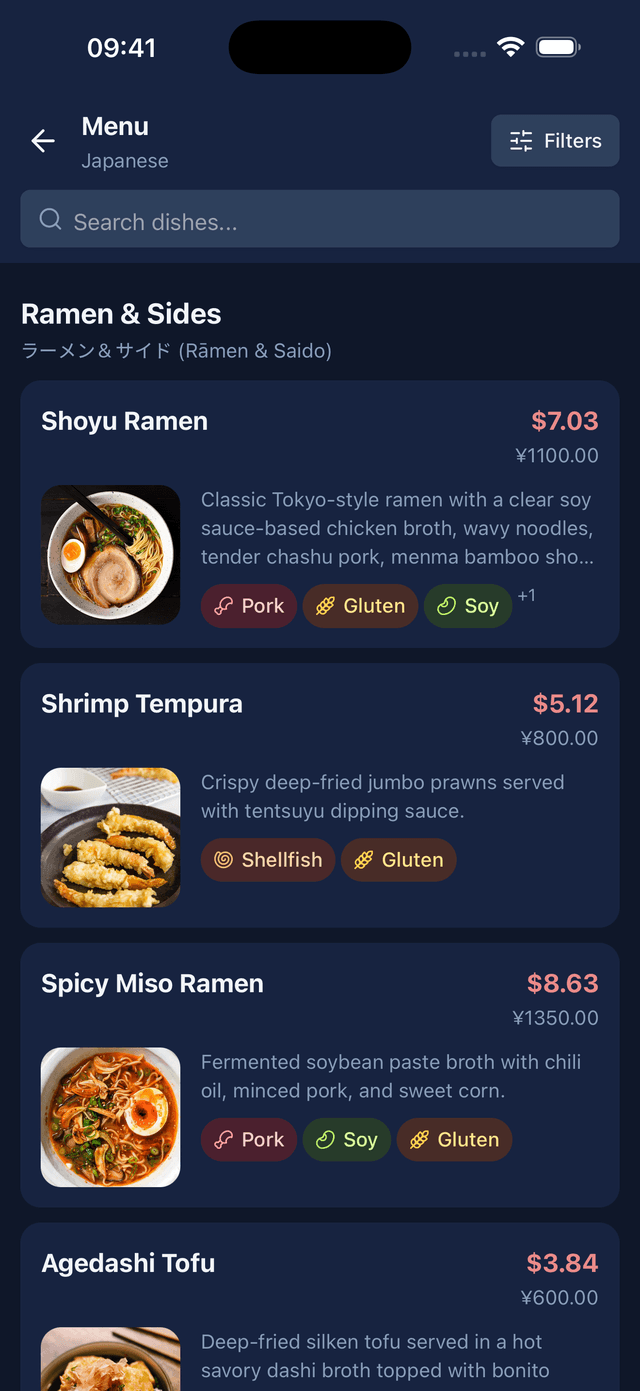
Take a photo of the menu in MenuVista. You get each dish back with its original name, a translation and a short description of what is in it. That tells you what patatas bravas or boquerones are. It does not pick the size for you. Check the column headers on the menu (tapa, media, ración) and choose the size yourself before you order.
Show the waiter what you want
Busy bars are loud, and size words are easy to mix up. In MenuVista, Show to Waiter puts the dish name on your screen in Spanish, so the waiter can read it. Show to Waiter is free. Point to the size you want, or say it with the phrases above.