Four phrases, learned properly
A greeting, “please”, “I would like this”, and “thank you” will carry you through most meals, and saying them badly in the local language does more good than saying anything fluently in English. The greeting matters more than travellers expect: in France, walking into a small restaurant without a “bonjour” starts the exchange on the wrong foot in a way that no amount of politeness afterwards repairs. Learn to say the numbers one and two if you can, so you can say how many of you there are without holding up fingers.
Point at the right thing
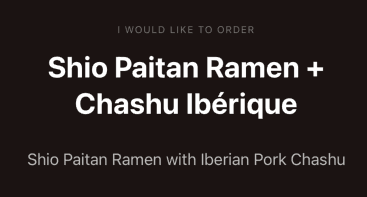
Once you have chosen a dish, the failure mode is showing a waiter an English translation of its name. They have not seen the English menu, the translation may be idiosyncratic, and you have just made them do the work. Point at the line on the printed menu instead, or show the original name on your phone in the original script. Anything that displays the dish in the local language turns an awkward exchange into a two-second one and removes the risk of being served whatever they guessed you meant.
Saying what you cannot eat
Do not improvise this one out loud. A written line in the local language — “no pork”, “no shellfish”, “I cannot eat nuts” — is understood immediately and cannot be misheard over a noisy dining room. Keep it absolute and simple, because hedged phrasing translates into “a little is fine”, which is not what you meant. If the restriction is medical rather than a preference, say so explicitly: kitchens treat those differently, and they should.
How ordering actually works, by place
Most of the confusion in ordering abroad is mechanical rather than linguistic. A few patterns cover a lot of countries.
- Japan: many small restaurants use a ticket machine at the door — buy the ticket first, then sit down and hand it over. Photos and numbers on the machine do most of the work.
- Spain: at a busy tapas bar, you order at the bar rather than waiting to be served, and the barman keeps a running tally.
- Italy: coffee standing at the bar is cheaper than sitting down, and a coperto per person is normal rather than a scam.
- France: the prix fixe at lunch is usually the best value in the building, and the bill will not arrive until you ask.
- Germany and Austria: cash still rules in a surprising number of small restaurants — ask before you sit down.
- Much of Asia: the set meal is the default at lunch, and pointing at a photo on the wall is an entirely normal way to order.
Set menus are usually the answer
Menú del día in Spain, formule or prix fixe in France, teishoku in Japan, pranzo di lavoro in Italy — nearly every country has a fixed lunch menu that exists for local workers rather than for tourists. It is cheaper, it is what the kitchen is set up to cook well that day, and it removes most of the decision. If you are unsure what to order and short on translation patience, order that.
Paying, and getting out
In France, Italy and Spain the bill is not brought until you request it, and waiting politely for it can eat half an hour. Catch the waiter's eye and ask, or make the small writing gesture, which is understood almost everywhere. In Japan you commonly take the slip to the counter and pay there, and tipping is not expected and can cause confusion. Tipping norms vary enough that it is worth a thirty-second check before the trip: a service charge is often already on the bill in Europe, whereas in the US it usually is not.