How a Vietnamese dish name works
Read a Vietnamese dish name like a short list. First the base, then the main ingredient, then the way it is cooked. The order is not fixed, but these three parts come back again and again. Bún chả is rice noodles with grilled pork patties. Phở bò is phở with beef. Cơm tấm sườn nướng is broken rice with a grilled pork chop. Once you know about twenty words, most menus start to make sense.
The base: noodles, rice and bánh
This is the word to look at first. It tells you what is in the bowl or on the plate.
- Phở: flat rice noodles. Phở bò and phở gà are noodle soups with beef or chicken.
- Bún: thin, round rice noodles. Served in soup, like bún bò Huế, or dry with grilled meat, like bún chả.
- Mì: wheat noodles, often yellow egg noodles.
- Miến: glass noodles, clear and slippery.
- Cơm: cooked rice. Cơm tấm is broken rice, a dish from the south.
- Xôi: sticky rice. Cháo: rice porridge.
- Bánh: breads, cakes, crepes and rolls made from a dough or batter. Bánh mì is the baguette sandwich, bánh xèo a crispy crepe, bánh cuốn steamed rice rolls.
Phở vs bún: what is the difference?
Both are rice noodles. Phở noodles are flat. Bún noodles are thin and round. The word names the noodle, not the dish, so neither one is always a soup. Phở bò is a beef noodle soup, but phở xào is stir-fried and phở cuốn is rolled up like a fresh spring roll. Bún can be a soup too, like bún riêu with crab, or a dry bowl of noodles, herbs and grilled pork with a sauce on the side.
Meat, fish and vegetables
The second word is often the main ingredient.
- Bò: beef. Gà: chicken. Vịt: duck.
- Heo or lợn: pork. Heo is used more in the south, lợn in the north.
- Thịt: meat, often pork when no other word follows.
- Tôm: shrimp. Cua: crab. Cá: fish. Mực: squid.
- Trứng: egg. Đậu hũ: tofu. Rau: vegetables or greens.
- Chay: vegetarian.
Cooking words: grilled, fried, steamed
The cooking word is often at the end of the name. It tells you how the dish will taste and feel.
- Nướng: grilled, often over charcoal.
- Chiên: deep-fried or fried. In the north you may see rán.
- Xào: stir-fried.
- Luộc: boiled.
- Hấp: steamed.
- Kho: braised in a salty, sweet sauce.
- Cuốn: rolled. Gỏi cuốn are fresh rolls in rice paper.
- Cay: spicy. Không cay: not spicy.
Phở cuts: tái, chín, nạm and gân
At a phở shop, the menu often lists the beef in the bowl. These words tell you the cut and how much it is cooked.
- Tái: rare beef, cooked by the hot broth.
- Chín: well-done beef.
- Tái chín: a mix of rare and well-done.
- Nạm: flank. Gầu: fatty brisket.
- Gân: tendon. Sách: tripe.
- Bò viên: beef balls.
- Đặc biệt: special, usually a bowl with a bit of everything.
Sections, tone marks and prices
A few more things help when you read the whole menu.
- Section headings: món khai vị means starters, món chính means main dishes, đồ uống means drinks.
- Tone marks change the meaning. Phở is the noodle, phố is a street. Menus outside Vietnam often drop the marks, so pho and phô can both mean phở.
- Prices in Vietnam use a dot to group thousands. A price of 45.000 means forty-five thousand dong.
- Tô is a bowl and đĩa is a plate. Some menus price a dish per bowl or per plate.
Eating vegetarian: chay and fish sauce
Chay marks a vegetarian dish, and some restaurants are fully chay. In other places, a dish without meat can still use nước mắm, the fish sauce that goes into many dipping sauces and broths. If you don't eat fish, ask before you order. Our guide to eating vegetarian abroad has the phrases you need.
How to order in Vietnamese
Short phrases work well. You can also point at the menu.
- Cho tôi một tô phở bò. (A bowl of beef phở, please.)
- Cho tôi cái này. (This one, please.)
- Không cay. (Not spicy.)
- Bao nhiêu? (How much?)
- Tính tiền. (The bill, please.)
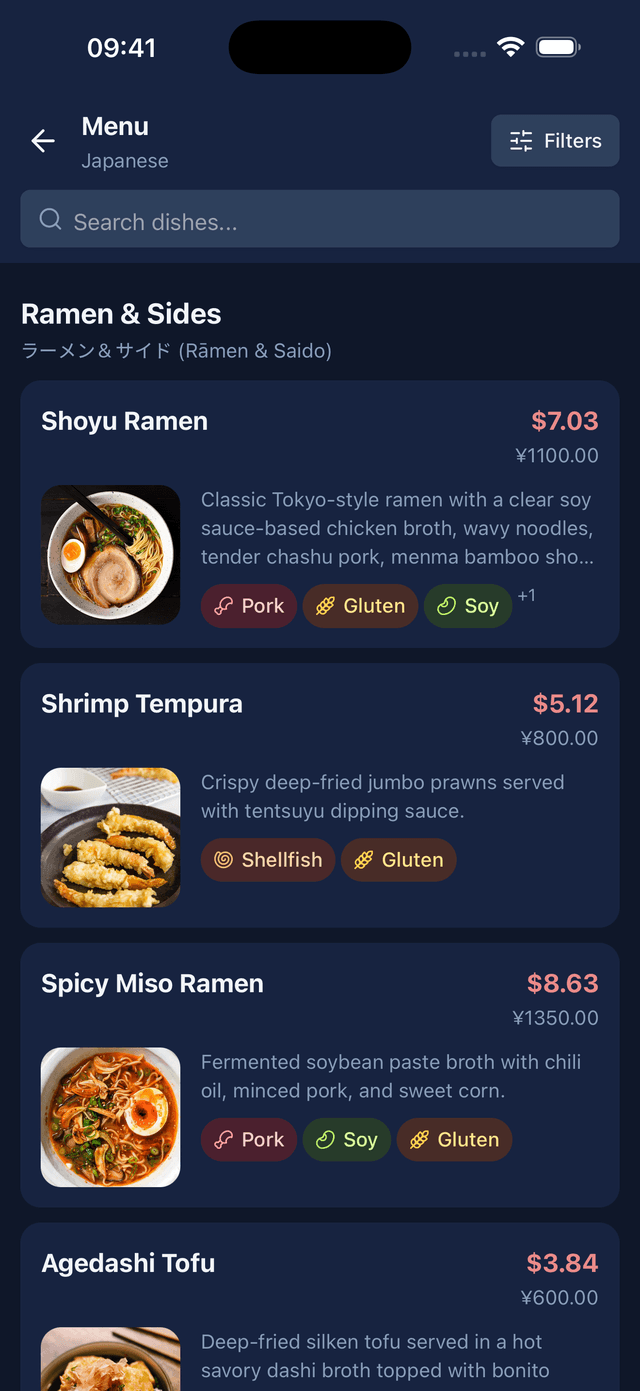
Reading a Vietnamese menu with MenuVista
Take a photo of the menu in MenuVista. You get each dish back with its Vietnamese name, a translation and a short description of what is in it. The dishes stay under the menu's own sections, so the phở stays with the phở and the drinks stay with the drinks. When you know what you want, Show to Waiter puts the dish name on your screen in Vietnamese, so you can show it at the counter or to the waiter.