Guide

Italian menu courses: antipasti, primi, secondi and what they mean

An Italian menu is split into courses, in the order they come to the table: antipasti (starters), primi (pasta, risotto or soup), secondi (meat or fish), contorni (side dishes) and dolci (desserts). You don't have to order a dish from every course. Most people pick a primo or a secondo, maybe with a starter or a dessert. Look at the bottom of the menu too. That is where you find the coperto, a cover charge paid per person.

Last updated November 2, 2026

The short version

  • Antipasti, primi, secondi, contorni, dolci: this is the order the courses come in.
  • You don't need every course. One primo or one secondo is a normal meal.
  • Secondi often come alone. Order a contorno if you want vegetables or potatoes.
  • Coperto is a cover charge per person. It must be written on the menu.
  • S.Q. and all'etto mean the price depends on weight. Ask before you order.

The courses on an Italian menu, in order

Italian menus follow the order of a full meal. Each heading is a course. Here is what each one means.

  • Antipasti: starters. Think cured meats, cheese, bruschetta or marinated vegetables.
  • Primi (primi piatti): first courses. Pasta, risotto, gnocchi or soup.
  • Secondi (secondi piatti): main courses. Meat or fish.
  • Contorni: side dishes, like roast potatoes, salad or grilled vegetables.
  • Dolci: desserts, like tiramisù or panna cotta.
  • Caffè: an espresso, often at the very end of the meal.

Do you have to order every course?

No. A full meal with every course is mostly for special days, like weddings and holidays. On a normal day, Italians often eat just a primo or just a secondo, sometimes both. Nobody will mind if you order one pasta dish and a coffee. If you are two, you can share a starter and each take a primo. Order a dessert later if you are still hungry.

Why your main course comes without sides

In many Italian restaurants, a secondo is just the meat or the fish on the plate. Vegetables and potatoes are not included. They are in the contorni section, and you order them on their own. The contorno comes on its own small plate, next to your secondo. If you want fries with your steak, look for patate fritte under contorni.

What coperto means on an Italian bill

Coperto is a cover charge. You pay it once per person, for the bread, the table and the cutlery. Some menus say pane e coperto, which means bread and cover. The charge is legal in most of Italy, but only if it is written on the menu before you order. The Italian consumer group Altroconsumo says you can contest it if it was not shown. The Lazio region, where Rome is, bans the coperto for table service. A restaurant there can still show a service charge on the menu.

  • Coperto: cover charge, per person.
  • Pane e coperto: bread and cover, also per person.
  • Servizio: service charge. Servizio incluso means it is already in the prices. Servizio non incluso means it is not.

Do you tip in Italy?

Tipping is not expected the way it is in the United States. The coperto is not a tip. If the service was good, many people leave a few coins or round up the bill. If the bill already shows a servizio charge, you don't need to add more.

S.Q., all'etto and the asterisk

Some prices are not a simple number. Here is how to read them.

  • S.Q. means secondo quantità, by quantity. You pay for what you get, often fish sold by weight. Ask the price per kilo and how big the fish is before you order.
  • All'etto means per etto. An etto is 100 grams. A steak priced all'etto that weighs one kilo costs ten times that price.
  • An asterisk (*) next to a dish often leads to a note at the bottom of the menu. On many menus, it means one of the ingredients was frozen (surgelato or congelato).

Other words you will see on an Italian menu

A few more words show up on menus all over Italy.

  • Piatto del giorno: dish of the day.
  • Fuori menu: off the menu. These are specials, often told to you out loud. Ask the price.
  • Menu fisso or pranzo di lavoro: a set lunch at one price.
  • Vino della casa: house wine, often sold by the carafe.
  • Acqua naturale or frizzante: still or sparkling water.
  • Trattoria and osteria: simple, family-style restaurants. Ristorante is usually more formal.

How to order in Italian

Short phrases are enough. Point at the menu if you need to.

  • Per me, un primo: gli spaghetti alla carbonara. (For me, a first course: the spaghetti carbonara.)
  • Prendo solo un secondo, grazie. (I'll just have a main course, thanks.)
  • Un contorno di patate al forno, per favore. (A side of roast potatoes, please.)
  • Quanto costa il pesce? È a peso? (How much is the fish? Is it by weight?)
  • Il servizio è incluso? (Is service included?)
  • Il conto, per favore. (The bill, please.)

Reading an Italian menu with MenuVista

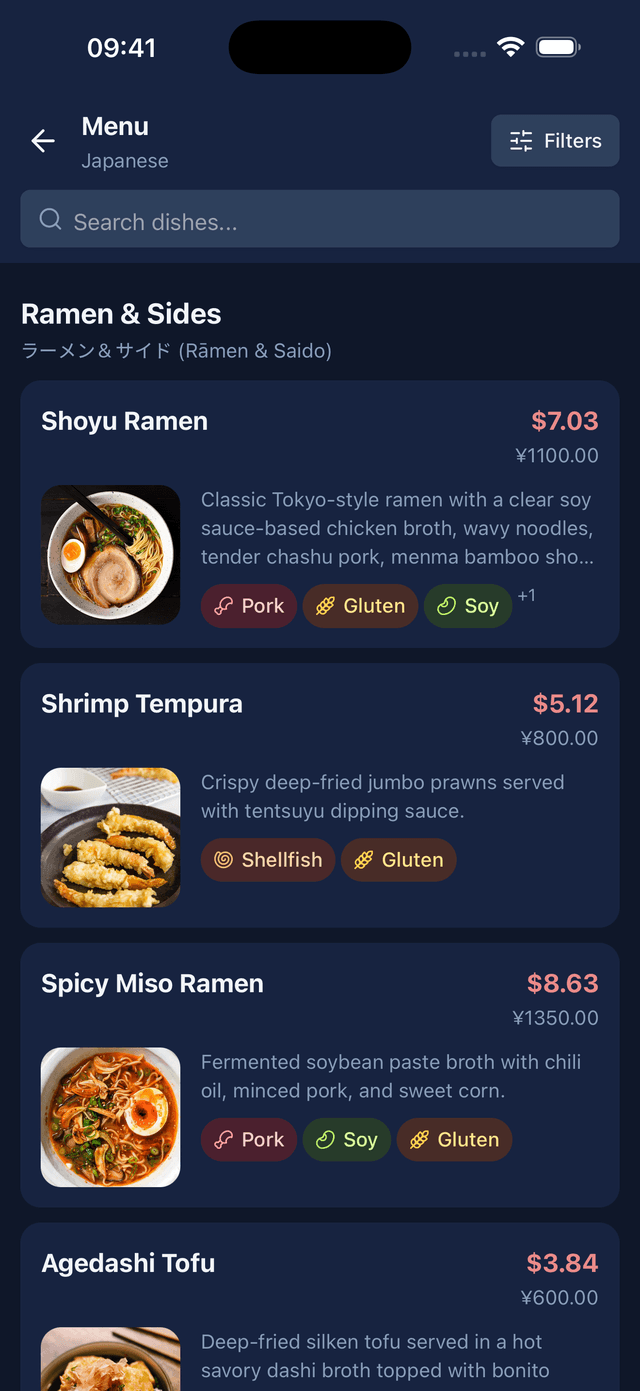
Take a photo of the menu in MenuVista. You get the dishes back under the menu's own headings, with the Italian heading and its translation, like Primi and First Courses. Each dish shows its Italian name, a translation and a short description of what is in it. When the menu says S.Q. instead of a price, MenuVista does not guess a number, so you know to ask. Notes in small print, like the coperto line, are not dishes. Read the bottom of the menu yourself before you order.

Show the waiter what you want

In MenuVista, Show to Waiter puts the dish name on your screen in Italian, so the waiter can read it. Show to Waiter is free. It helps in a busy trattoria, or when you are not sure how to say a dish.

FAQ

Questions people ask

What is the order of courses in an Italian meal?
Antipasti (starters), then primi (pasta, risotto or soup), then secondi (meat or fish) with contorni (sides), then dolci (desserts) and coffee. You can skip any course.
What is the difference between primi and secondi?
Primi are first courses, usually pasta, risotto, gnocchi or soup. Secondi are main courses of meat or fish. In Italy, a primo is a full dish, not a small starter.
What is a contorno?
A contorno is a side dish, like potatoes, salad or vegetables. It is ordered on its own and comes on a separate plate, next to your secondo.
What does coperto mean on a bill in Italy?
Coperto is a cover charge paid per person for bread, the table and cutlery. It is legal if it is written on the menu before you order. The Lazio region, where Rome is, bans it for table service.
Is service included in Italy?
Look for the words servizio incluso or servizio non incluso on the menu. Tipping is not expected like in the United States. Many people leave a few coins or round up when service is good.
What does S.Q. mean on an Italian menu?
S.Q. means secondo quantità, by quantity. The price depends on the weight, often for fish. Ask the price per kilo and the size before you order.

Know what each dish is before you order

Take a photo of the menu and MenuVista shows you each dish in your language, with a short description. Free to try. No account needed.

Download on the App StoreGet it on Google Play

Free to try. No account needed.

A photographed menu turned into translated dishes with short descriptions in MenuVista