Guide

Indian menu terms explained: what the words on the menu mean

Most Indian dish names tell you two things: the main food and how it is cooked. Murgh tikka is chicken pieces grilled in a hot clay oven. Palak paneer is fresh cheese in a spinach sauce. Once you know the words for cooking, sauces, main foods, breads and rice below, most Indian menus become easy to read. Many of these menus are already written in English letters, so a translation app often leaves tikka as tikka. MenuVista shows each dish with a plain description of what it is.

Last updated November 21, 2026

The short version

  • A dish name usually joins a main food word and a cooking or sauce word: aloo gobi is potato and cauliflower.
  • Tandoori and tikka mean grilled in a clay oven. Masala, makhani and korma are sauces.
  • Murgh is chicken, gosht is lamb or goat, paneer is fresh cheese and dal is lentils.
  • Naan, roti and paratha are breads. Biryani and pulao are rice dishes.
  • Ghee, cream, cashews and mustard are common in Indian cooking. Allergen flags in an app are estimates: always confirm with the restaurant.

How an Indian dish name is built

Read the name as two parts. One word is the main food, like murgh (chicken) or aloo (potato). The other word tells you how it is cooked or which sauce it comes in, like tikka or masala. The order can change, so look for both.

  • Murgh tikka: chicken pieces grilled in a clay oven.
  • Chicken tikka masala: those grilled pieces in a spiced tomato sauce, usually with cream.
  • Aloo gobi: potato and cauliflower cooked with spices.
  • Chana masala: chickpeas in a spiced onion and tomato sauce.
  • Dal makhani: black lentils cooked slowly with butter and cream.

Cooking words

These words tell you how the dish was made. They are the fastest way to guess what will arrive.

  • Tandoori: marinated, then cooked in a tandoor, a very hot clay oven.
  • Tikka: boneless pieces, marinated and grilled. Paneer tikka is the vegetarian version.
  • Kebab or seekh kebab: meat grilled on a skewer, often minced.
  • Dum: slow-cooked in a sealed pot, as in dum biryani.
  • Bhuna: fried for a long time so the sauce is thick and clings to the meat.
  • Kadai or karahi: cooked in a deep iron pan, usually with peppers and onions.
  • Tadka: spices fried in hot oil or ghee and poured over the dish, as in dal tadka.

Sauce words

Curry on a menu just means a dish with a sauce. These words tell you which sauce.

  • Masala: a spice mix. On a menu, a dish in a spiced sauce.
  • Makhani: buttery. A sauce of butter, tomato and cream. Butter chicken is murgh makhani.
  • Korma: meat or vegetables cooked in yogurt or cream, often with ground nuts. Usually rich and mild.
  • Vindaloo: a hot and sour curry from Goa, made with vinegar and chili.
  • Jalfrezi: a stir-fry with peppers, onions and green chili.
  • Saag or palak: a sauce of greens. Palak means spinach.
  • Malai: cream. Malai tikka is marinated in cream for a mild taste.

Main food words

Learn these and you can tell what is in most dishes, even when the rest of the name is new.

  • Murgh: chicken. Gosht: meat, usually lamb or goat. Keema: minced meat.
  • Machli: fish. Jhinga: prawns.
  • Paneer: a fresh cheese that keeps its shape when cooked.
  • Dal: lentils, and the dish made from them.
  • Chana or chole: chickpeas. Rajma: kidney beans.
  • Aloo: potato. Gobi: cauliflower. Matar: peas.
  • Baingan: eggplant. Bhindi: okra.

Breads and rice

Breads and rice are usually ordered on their own, not served with the curry. Order one or two for the table.

  • Naan: a soft bread baked on the wall of the tandoor. Garlic naan and butter naan are common.
  • Roti or chapati: a thin flatbread made from whole wheat.
  • Paratha: a layered bread fried on a flat pan, sometimes stuffed with potato.
  • Puri: a small bread that puffs up when fried.
  • Biryani: rice layered with meat, fish or vegetables and cooked slowly.
  • Pulao: rice cooked with spices, lighter than biryani. Jeera rice is rice with cumin.

Starters, sides, drinks and desserts

Starters and sides can be a meal on their own. Raita is a good choice if a dish is too spicy.

  • Samosa: a fried pastry filled with spiced potato and peas, sometimes meat.
  • Pakora: vegetables fried in a chickpea flour batter.
  • Papad or poppadom: a thin, crisp wafer made from lentils.
  • Raita: yogurt with cucumber or spices. Chutney: a sweet or sour sauce. Achar: pickle.
  • Lassi: a yogurt drink, sweet, salty or with mango.
  • Gulab jamun: soft milk dough balls in syrup. Kheer: rice pudding. Kulfi: a dense ice cream.

Reading an Indian menu with MenuVista

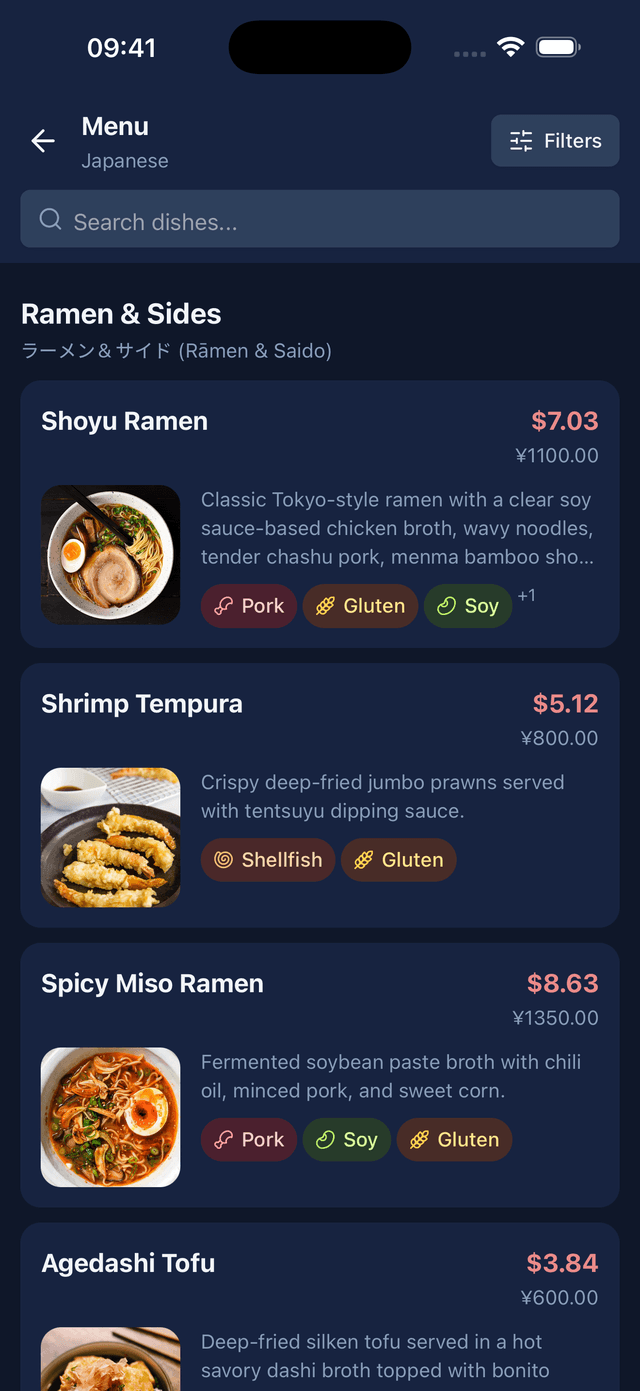
To read an Indian menu, take a photo of the menu, or upload a photo or a PDF. Handwritten and chalkboard menus work too. MenuVista shows each dish with its name, a translation and a plain description of what it is, grouped under the menu's own headings. That matters here, because a word-for-word translation keeps words like tikka, korma or makhani as they are. The description tells you what the dish actually is. Likely allergen flags appear on each dish for the 14 EU allergens. When you are ready, use “Show to Waiter” and point at the dish. Free to try. No account needed.

Veg, non-veg and allergy words

Many menus in India split dishes into veg and non-veg. On packaged food in India, the vegetarian mark is a green dot in a green square, and the non-vegetarian mark is a brown triangle in a brown square. Many restaurants use similar green and red or brown marks. For allergies, know where milk and nuts hide. MenuVista flags likely matches for the 14 EU allergens, but an app flag is an estimate, not a medical certificate. Always ask about each dish if you have a real allergy.

  • Ghee: clarified butter. It is made from milk and used in many dishes and breads.
  • Cream, butter, yogurt and paneer: all milk.
  • Cashews and almonds: often ground into korma and other creamy sauces.
  • Mustard seeds and mustard oil: common, especially in dishes from the east and south of India.
  • Naan, roti and paratha: made from wheat, so they contain gluten.
  • Veg or vegetarian: no meat, fish or egg. It can still contain milk.

Words for spice and ordering

Spice levels change a lot from one restaurant to the next. Ask, and point at the dish on your screen if you are not sure how to say it. In most Indian restaurants abroad, English works fine.

  • Mild, medium or hot: the usual way to ask for a spice level.
  • Mirch: chili. Teekha: spicy. Kam teekha: less spicy.
  • Thali: a set meal on one big plate, with small bowls of several dishes, rice and bread.
  • Can you make it less spicy? Does this have nuts? Does this have ghee or cream?

Decode an Indian dish name in 4 steps

  1. 1

    Find the main food

    Look for the word for the main food: murgh, gosht, paneer, aloo, chana or dal.

  2. 2

    Find the cooking or sauce word

    Look for tandoori, tikka, masala, makhani, korma or vindaloo. It tells you how the dish is made and if it is creamy, dry or hot.

  3. 3

    Check veg, spice and allergens

    Check the veg or non-veg section, ask about the spice level, and ask about ghee, cream and nuts if you need to.

  4. 4

    Add bread or rice

    Order naan, roti or rice on the side. Biryani is already a full rice dish, so it does not need extra rice.

MenuVista showing a scanned menu with dishes grouped under the menu's headings (sample menu is Japanese)
FAQ

Questions people ask

What does tikka mean on an Indian menu?
Tikka means boneless pieces, usually marinated and grilled in a tandoor. Chicken tikka is the grilled pieces on their own. Chicken tikka masala is the same pieces in a spiced tomato sauce.
Is korma spicy?
Usually not. Korma is cooked in yogurt or cream, often with ground nuts, so it is rich and mild. Ask the restaurant, because each kitchen makes it a little differently, and skip it if you have a nut allergy.
What is the difference between naan and roti?
Naan is a soft bread made with white flour and baked on the wall of a tandoor. Roti is a thin flatbread made from whole wheat and cooked on a flat pan.
What does masala mean?
Masala means a mix of spices. On a menu, a masala dish comes in a spiced sauce, often with onion and tomato.
What is paneer?
Paneer is a fresh cheese that keeps its shape when you cook it. It is the main protein in many vegetarian dishes, like palak paneer and paneer tikka.
Is ghee dairy?
Yes. Ghee is clarified butter, so it comes from milk. It is used in many Indian dishes and breads, even some that look dairy-free.
Can an app translate an Indian menu?
Yes. MenuVista reads a photo of the menu and shows each dish with a translation and a plain description of what it is, so words like makhani or bhuna make sense. Free to try. No account needed.

From tikka to naan

Once you know a few words for cooking, sauces and main foods, an Indian menu is much less of a guessing game. Photograph the menu with MenuVista and use “Show to Waiter” when you order. Free to try. No account needed.

Download on the App StoreGet it on Google Play

Free to try. No account needed.

MenuVista showing a scanned menu with dishes grouped under the menu's headings (sample menu is Japanese)