Hangul is an alphabet you can sound out
Korean is written in Hangul, an alphabet created in the 15th century. It has 14 basic consonants and 10 basic vowels. The letters are grouped into square blocks, and each block is one syllable. So 김치 is two blocks: 김 (gim) and 치 (chi). Once you know the letters, you can sound out any word, even if you do not know what it means. Some words on a menu are borrowed from English, like 치즈 (chijeu, cheese) or 버거 (beogeo, burger). Say them out loud and you will often recognise them.
Spelling in Latin letters varies
Menus that print Korean in Latin letters do not all spell it the same way. South Korea's official system writes 불고기 as bulgogi and 찌개 as jjigae, but you will also see pulgogi or chigae. The official spelling of 김치 is even gimchi, yet almost everyone writes kimchi. If a word looks almost familiar, sound it out. It is probably the same dish.
How a Korean dish name is built
Read the name in two parts. The main ingredient usually comes first and the cooking style comes last. 된장찌개 (doenjang jjigae) is a stew made with 된장, a fermented soybean paste. 해물파전 (haemul pajeon) is 해물 (seafood), 파 (spring onion) and 전 (pancake): a seafood and spring onion pancake. A few names are traps. 닭갈비 (dakgalbi) means "chicken ribs", but it is usually pieces of chicken stir-fried in a spicy sauce, with no ribs at all.
Reading a Korean menu with MenuVista
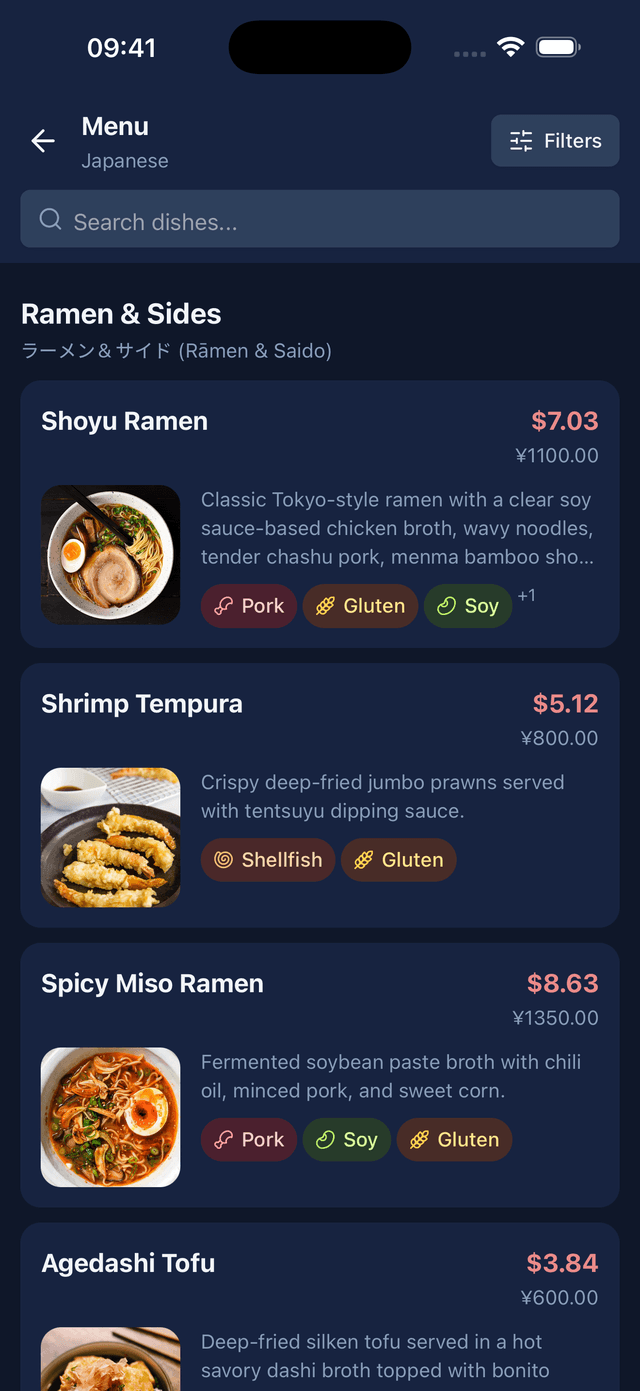
Point your camera at the menu board or the paper menu, and MenuVista lists each dish under the menu's own sections, with the Korean name, the name in your language and a short description of what the dish is. It also flags likely allergens from the 14 EU allergens, such as sesame, soy, crustaceans and fish. This is an estimate from the menu and typical recipes, so always check with the restaurant. Wall menus and handwritten boards work too, but check the result when the writing is hard to read. When you are ready, Show to Waiter puts the dish name in Korean on your screen, so you can just point.
Cooking endings
These words usually come at the end of the dish name. They tell you how the food is cooked and what kind of dish you will get.
- 구이 (gui): grilled. 생선구이 (saengseon gui) is grilled fish. At barbecue places you often grill the meat yourself at the table.
- 볶음 (bokkeum): stir-fried. 볶음밥 (bokkeumbap) is fried rice.
- 찌개 (jjigae): a thick stew, served bubbling hot and eaten with rice, like 김치찌개 or 된장찌개.
- 국 (guk) and 탕 (tang): soup. 미역국 (miyeokguk) is seaweed soup. 탕 is often a richer soup cooked for a long time, like 갈비탕 (galbitang, beef rib soup) or 삼계탕 (samgyetang, chicken soup with ginseng).
- 전골 (jeongol): hot pot, cooked in a wide pan at your table and shared.
- 찜 (jjim): braised or steamed. 갈비찜 (galbijjim) is braised short ribs and 계란찜 (gyeranjjim) is steamed egg.
- 조림 (jorim): simmered in a sauce, often made with soy sauce, until it gets thick, like 감자조림 (potatoes) or 고등어조림 (mackerel).
- 전 (jeon): a savoury pancake, or food dipped in egg batter and pan-fried, like 김치전 (kimchijeon).
- 튀김 (twigim): deep-fried, often in a light batter.
- 무침 (muchim): mixed with seasoning, often a cold vegetable side dish, like 콩나물무침 (kongnamul muchim, bean sprouts).
- 비빔 (bibim): mixed. 비빔밥 (bibimbap) is rice with vegetables and toppings that you mix before eating.
- 덮밥 (deopbap): a rice bowl with a topping, like 제육덮밥 (jeyuk deopbap, spicy pork on rice).
- 면 (myeon) and 국수 (guksu): noodles. 냉면 (naengmyeon) are cold noodles and 칼국수 (kalguksu) are knife-cut noodles in soup.
- 회 (hoe): raw fish, a bit like sashimi. 물회 (mulhoe) is raw fish in a cold, spicy broth.
Meat, seafood and other ingredients
The ingredient usually comes first in the name. 고기 (gogi) on its own just means meat, so check which one.
- 소고기 (sogogi): beef. You may also see 쇠고기 (soegogi), or just 소 (so) as in 소갈비 (beef ribs).
- 돼지고기 (dwaejigogi): pork. 돼지 (dwaeji) means pig, and 삼겹살 (samgyeopsal) is pork belly.
- 닭 (dak): chicken. 닭고기 (dakgogi) is chicken meat. 오리 (ori) is duck.
- 해물 (haemul): seafood. 생선 (saengseon) is fish, 새우 (saeu) is shrimp and 오징어 (ojingeo) is squid.
- 두부 (dubu): tofu. 순두부 (sundubu) is very soft tofu, often in a spicy stew.
- 김치 (kimchi): fermented vegetables, usually napa cabbage with chilli. It often contains fish sauce or salted shrimp.
- 된장 (doenjang): fermented soybean paste, salty and rich.
- 양념 (yangnyeom): seasoned or marinated. 생 (saeng) means plain, not marinated, like 생갈비 (saeng galbi).
Spice words: 매운 and 순한맛
Korean food can be very spicy, and the heat usually comes from chilli. A deep red colour is a good warning sign. These words help you choose.
- 고추 (gochu): chilli pepper. 고춧가루 (gochutgaru) is chilli flakes.
- 고추장 (gochujang): a thick red chilli paste, spicy and a little sweet.
- 매운 (maeun): spicy. 매운맛 (maeunmat) is the spicy version of a dish.
- 순한맛 (sunhanmat): the mild version. 보통맛 (botongmat) is the regular one.
- 안 맵게 해 주세요 (an maepge hae juseyo): please make it not spicy. Some dishes cannot be made mild, because the sauce is made in advance.
Ordering words: portions, sides and extras
These words change what you get and what you pay.
- 인분 (inbun): serving. 1인분 is one serving and 2인분 is two. On barbecue menus the price is often for 1인분, sometimes with the weight in grams.
- 최소 2인분 or 2인분 이상: a minimum order of two servings. Many barbecue and hot pot restaurants ask for this, so eating there alone can be hard.
- 반찬 (banchan): small side dishes that come with the meal. They are usually free, and you can usually ask for more.
- 공기밥 (gonggibap): a bowl of steamed rice. At barbecue and stew places it is often ordered and paid for separately.
- 추가 (chuga): extra. 사리 (sari) is an extra portion of noodles added to a stew or hot pot, like 라면사리 (ramyeon sari).
- 곱빼기 (gopbaegi): a double size, often for noodles, for a little more money.
- 대 (dae), 중 (jung), 소 (so): large, medium and small. Careful: on its own, 소 can also mean beef.
- 포장 (pojang): takeaway. 포장돼요? (pojang dwaeyo) means "can I take it away?"
Prices on a Korean menu
Prices are in won (원). Some menus drop the last zeros, so 9.0 can mean 9,000 won. 시가 (siga) means market price, often for raw fish or seafood. Grill menus may show a weight next to the price, like 150g for 1인분. Water is usually free, and in many places you pour it yourself.
Vegetarian food and allergies
Korean food has a lot of vegetables, but meat and fish hide in many dishes. Many soups and stews use a stock made with anchovies (멸치) or beef, and kimchi often contains fish sauce or salted seafood (젓갈). Sesame oil (참기름) and sesame seeds are in many dishes, and soy sauce (간장) usually contains wheat. To say you are vegetarian, show 저는 채식주의자예요 (jeoneun chaesikjuuijayeyo). To say you are allergic to shrimp, show 저는 새우 알레르기가 있어요. An app can flag likely allergens, but only the kitchen knows what is in the pot, so always ask. Our guides to food allergies and to eating vegetarian abroad have more tips.
Words to order and pay
A few phrases go a long way.
- 저기요 (jeogiyo): excuse me, to call the staff. Many tables also have a call button.
- 이거 주세요 (igeo juseyo): this one, please. Point at the menu as you say it.
- 2인분 주세요 (iinbun juseyo): two servings, please.
- 영어 메뉴 있어요? (yeongeo menyu isseoyo): do you have an English menu?
- 계산해 주세요 (gyesanhae juseyo): the bill, please. In many restaurants you pay at the counter by the door.