Guide

Menú del día: how to read a Spanish menu and order lunch

A menú del día is a set lunch at one price. You pick one first course (primero), one main course (segundo), and a dessert or a coffee. Bread and one drink are usually included. Most bars and restaurants in Spain serve it on weekday lunchtimes, and the dishes change often. The rest of the menu, called la carta, is priced dish by dish. Small words on the board, like supl., IVA incluido or postre o café, tell you what is in the price and what costs extra. MenuVista can photograph the board or the printed menu and show each dish in your language, under the menu's own headings.

Last updated November 21, 2026

The short version

  • Menú del día means one fixed price for a primero, a segundo, a dessert or coffee, bread and usually one drink.
  • It is mostly a weekday lunch deal. In the evening you usually order from la carta, dish by dish.
  • Postre o café means dessert or coffee, not both. Postre y café means both are included.
  • Supl. means a supplement: that dish costs extra on top of the menu price.
  • Allergen flags in an app are estimates: always confirm with the restaurant.

What is a menú del día?

The menú del día, often shortened to el menú, is the classic Spanish set lunch. You see it written on a board at the door or on a sheet clipped to the menu. There are usually a few choices for each course. You pick one dish from each group, and one price covers the whole meal. The words del día mean of the day, because the choices change from day to day. It is popular with people who work nearby, so it is often busy around two o'clock. If you want a quick, filling lunch at a fair price, this is usually the best deal in the place.
What is included in the price?

Each bar sets its own rules, so read the board or ask. A typical menú del día includes:

  • Primer plato, or primero: the first course. Often a salad, soup, legumes, rice or pasta.
  • Segundo plato, or segundo: the main course. Usually meat or fish with a side.
  • Postre o café: a dessert or a coffee. Fruit, flan or a yogurt are common desserts.
  • Pan y bebida: bread and one drink. Water, a soft drink, a small beer or a glass of house wine.
  • IVA incluido: the tax is already in the price.

Menú del día, la carta and tapas

Three ways of ordering can sit on the same menu. The menú del día is the set lunch. La carta is the full list of dishes, each with its own price, and it is what you order from at dinner. Tapas and raciones are portions you share at the bar. If you see three prices next to one dish, those are portion sizes, not courses. Our guide to tapas vs raciones explains those sizes. At lunch, if you are hungry and want several courses, the menú is almost always cheaper than ordering the same dishes from la carta.

The headings on a Spanish menu

A Spanish carta is grouped by type of dish. For the dish words themselves, see our Spanish menu words guide. The headings usually come in this order:

  • Entrantes: starters to share, like croquetas or a salad.
  • Primeros: first courses, such as soups, rice dishes or vegetables.
  • Segundos: main courses. Sometimes split into carnes (meat) and pescados (fish).
  • Platos combinados: one plate with a main and sides, a quick meal in casual bars.
  • Postres: desserts.
  • Bebidas: drinks.

Small words that change the bill

These marks are short, but they tell you what you will pay:

  • Supl. or suplemento: this dish costs extra on top of the menú price.
  • Postre o café: one or the other. Postre y café: both.
  • Bebida no incluida: the drink is not in the price.
  • Ud. or unidad: price per piece, common for croquetas or oysters.
  • S/M or según mercado: market price, often for fresh fish or seafood. Ask the price before you order.
  • Medio menú: half a menu, usually one course plus dessert or coffee, for a lower price.

How to order the menú del día in Spanish

The waiter may say the choices out loud instead of handing you a menu. These short phrases are enough:

  • ¿Tienen menú del día? Do you have a set lunch menu?
  • De primero, la ensalada. For the first course, the salad.
  • De segundo, el pollo. For the main course, the chicken.
  • ¿Qué hay de postre? What is there for dessert?
  • Agua, por favor. Water, please.
  • La cuenta, por favor. The bill, please.

Allergen caution

Spanish lunch menus often include bread, cheese, seafood and dishes cooked with eggs or wheat. An app can only hint at what might be in a dish. MenuVista flags likely matches for the 14 EU allergens, like gluten, milk, eggs, fish and crustaceans. An app flag is an estimate, not a medical certificate. If you have a real allergy, tell the waiter before you order and ask about each dish.

How MenuVista helps with a Spanish menu

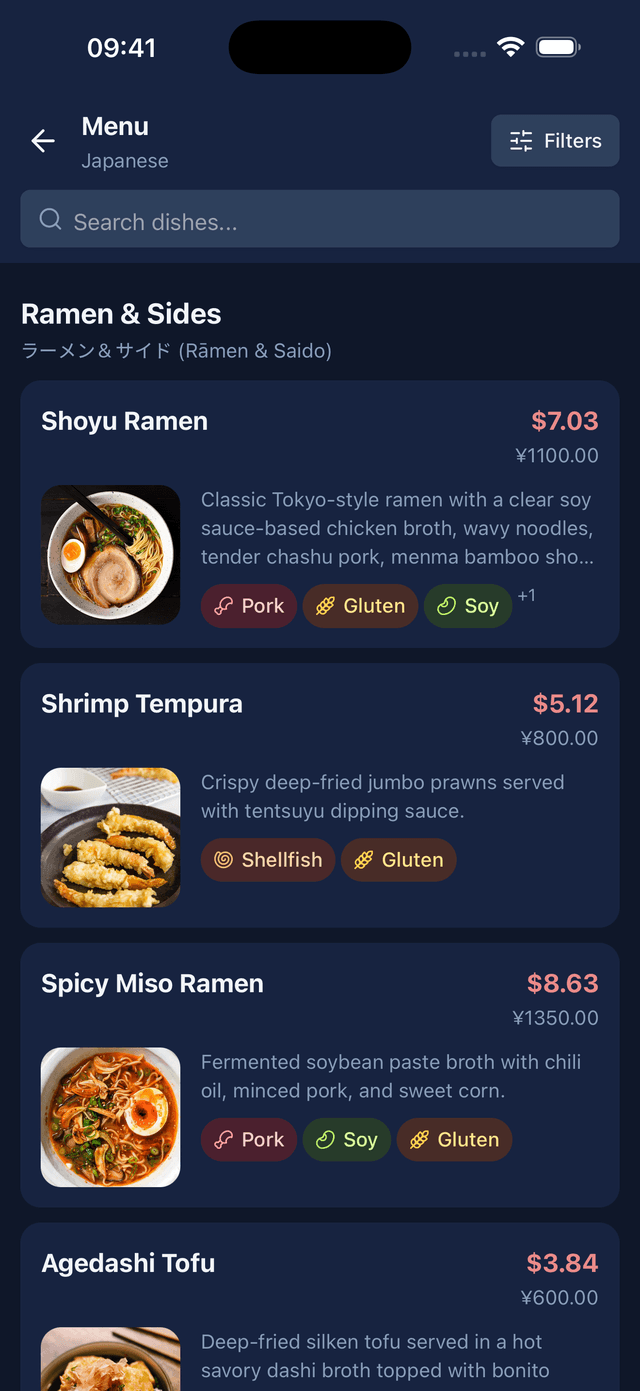
Take a photo of the board at the door or the printed menu, or upload a photo or a PDF. Handwritten and chalkboard menus work too. MenuVista shows each dish with its Spanish name, a translation and a plain description of what it is, grouped under the menu's own headings. So your primeros stay with the primeros and your segundos stay with the segundos. Likely allergen flags appear on each dish for the 14 EU allergens it checks. When you are ready, “Show to Waiter” puts the Spanish dish name on your screen so you can point. Free to try. No account needed.

Order a menú del día in five steps

  1. 1

    Find the board

    Look for Menú del día on a board at the door or a sheet inside the menu. Check the price and whether it says IVA incluido.

  2. 2

    Check what is included

    Read whether it says postre o café or postre y café, and whether bread and a drink are in the price.

  3. 3

    Pick one dish per course

    Choose one primero and one segundo. Look for supl. next to a dish, which means it costs extra.

  4. 4

    Check for allergens

    Photograph the menu with MenuVista to read each dish and see likely allergen flags. Confirm any allergy with the waiter.

  5. 5

    Order and point

    Say de primero and de segundo, or use “Show to Waiter” to point at the Spanish dish name.

MenuVista showing a scanned menu with dishes grouped under the menu's headings (sample menu is Japanese)
FAQ

Questions people ask

What does menú del día mean?
It means menu of the day. It is a set lunch at one price, usually a first course, a main course, dessert or coffee, bread and one drink. The dishes change often.
Is the menú del día served at dinner?
Usually not. Most places serve it on weekday lunchtimes only. At dinner you normally order from la carta, dish by dish. Some places in tourist areas offer an evening set menu, so check the board.
Is a drink included in the menú del día?
Often yes, one drink such as water, a soft drink, a small beer or a glass of house wine. Some places write bebida no incluida, which means you pay for the drink on top.
What does supl. mean on a Spanish menu?
Supl. is short for suplemento. That dish is part of the menú but costs extra. You often see it next to steak or seafood.
Can I share a menú del día?
It is meant for one person. If you are not very hungry, ask for medio menú, half a menu, if the place offers it.
What is the difference between primero and segundo?
Primero is the first course, often lighter, like a salad, soup or rice. Segundo is the main course, usually meat or fish with a side.

Read primero, segundo and postre o café

Once you know primero, segundo and postre o café, a Spanish lunch board is easy to read. Photograph the menu with MenuVista and use “Show to Waiter” when you order. Free to try. No account needed.

Download on the App StoreGet it on Google Play

Free to try. No account needed.

MenuVista showing a scanned menu with dishes grouped under the menu's headings (sample menu is Japanese)