Guide

How to read a French menu: formule, entrée, plat and à la carte

On a French menu, an entrée is the starter, not the main course. The main is the plat, or plat principal. A menu is usually a set of courses at one price. A formule is often a shorter, cheaper set, especially at lunch, such as entrée plus plat, or plat plus dessert. À la carte means you order each dish on its own and pay for each one. You do not have to take every course. Look also for small marks that change the bill, like suppl. or en supplément, boisson comprise, and service compris. MenuVista can photograph the paper menu or the ardoise and show each dish in your language, then help you Show to Waiter.

Last updated November 21, 2026

The short version

  • Entrée is the starter. Plat or plat principal is the main course. This is the mix-up that catches most English speakers.
  • A menu is usually a fixed-price set of courses. A formule is often a two-course lunch deal. À la carte is dish by dish.
  • You do not need every course. Fromage often comes before dessert. You can ask for une carafe d'eau, a jug of tap water.
  • Suppl. or en supplément means an extra charge. Boisson comprise means a drink is in the set price. Service compris means service is already in the posted prices.
  • Allergen flags in an app are estimates: always confirm with the restaurant.

Menu, formule and à la carte

The word menu does not always mean the whole list of dishes. In a French restaurant, le menu is often a set of courses at one posted price, sometimes also called a prix fixe. La formule is usually a shorter set, often two courses, and it is common at lunch under names such as formule midi or formule déjeuner. Typical pairings are entrée plus plat, or plat plus dessert. À la carte, or à la carte on la carte, means you pick dishes one by one from the full list and pay for each one. A set is often better value than picking the same dishes à la carte, but only if you actually want those courses. Read whether drinks are included before you choose.

The courses in order

A full French meal follows a set order. You can skip courses. A weekday lunch is often just a formule, not the whole sequence.

  • Entrée: the starter. In American English, entrée often means the main course. On a French menu it does not.
  • Plat or plat principal: the main course, usually meat, fish or a substantial vegetarian dish.
  • Fromage: the cheese course. In a classic meal it comes before dessert. If the waiter asks fromage ou dessert, they are asking which you prefer, though some places will serve both.
  • Dessert: the sweet course.
  • Café: coffee, often an espresso, usually at the end.
  • Digestif: a drink after the meal, if you want one.
  • Plat du jour: the main course of the day. Menu du jour is often a set built around that dish. These may be on a chalkboard, the ardoise.

Words that change the bill

A few short marks matter as much as the dish names. Read them before you order.

  • Suppl. or en supplément: an extra charge, often to swap a dish on a formule or to add a side.
  • Boisson comprise: a drink is included in the set price. Boisson non comprise means it is not.
  • Service compris: service is already included in the posted prices. You do not have to add a percentage the way you would in the United States. Some people still leave a little cash if the service was good. This guide does not give a tipping figure.
  • Prix TTC: the tax is already in the price.
  • Au choix: you choose between the options shown.
  • Fait maison: made in house.
  • Selon arrivage: depending on what has come in, often for fish or seasonal produce.
  • Menu enfant: a children's set menu.

Useful ordering phrases

Short sentences are enough. Point at the line on the menu if you need to.

  • Je prendrai la formule midi, s'il vous plaît. (I'll have the lunch set, please.)
  • L'entrée et le plat, s'il vous plaît. (The starter and the main, please.)
  • Le plat du jour, s'il vous plaît. (The main course of the day, please.)
  • Une carafe d'eau, s'il vous plaît. (A jug of tap water, please.)
  • Le supplément est compris dans la formule ? (Is the supplement included in the set?)
  • Je prendrai à la carte. (I'll order from the à la carte list.)
  • L'addition, s'il vous plaît. (The bill, please.)

Allergen caution

Butter, cream and cheese show up in many French sauces and desserts, and wheat is common in pastry and sauces. An app can only hint at what might be in a dish. MenuVista flags likely matches for the 14 EU allergens, including milk and gluten. An app flag is an estimate, not a medical certificate. Always tell the kitchen about a real allergy before you order.

How MenuVista helps on a French menu

Photograph the paper menu or the ardoise, or upload a photo or a PDF. MenuVista returns each dish with the original name, a translation and a plain description, grouped under the menu's own headings, so a formule block stays a formule block. Likely allergen flags appear on the dish cards for the 14 EU allergens it checks. When you are ready to order, Show to Waiter puts the French dish name on your screen so the waiter can read it. Show to Waiter is free.

Read a French menu in five steps

  1. 1

    See whether you are on a formule, a menu or à la carte

    Find the set-price block first. That is often the lunch deal. À la carte dishes are priced one by one.

  2. 2

    Read the courses in order

    Entrée is the starter, plat is the main, fromage often comes before dessert. You can skip a course.

  3. 3

    Check the marks that change the price

    Look for suppl., boisson comprise or non comprise, and service compris before you choose.

  4. 4

    Ask for what you want in a short sentence

    Point at the line if you need to. Une carafe d'eau is a jug of tap water.

  5. 5

    Confirm allergies with the kitchen

    Use an app estimate only as a hint, then tell the waiter what you cannot eat.

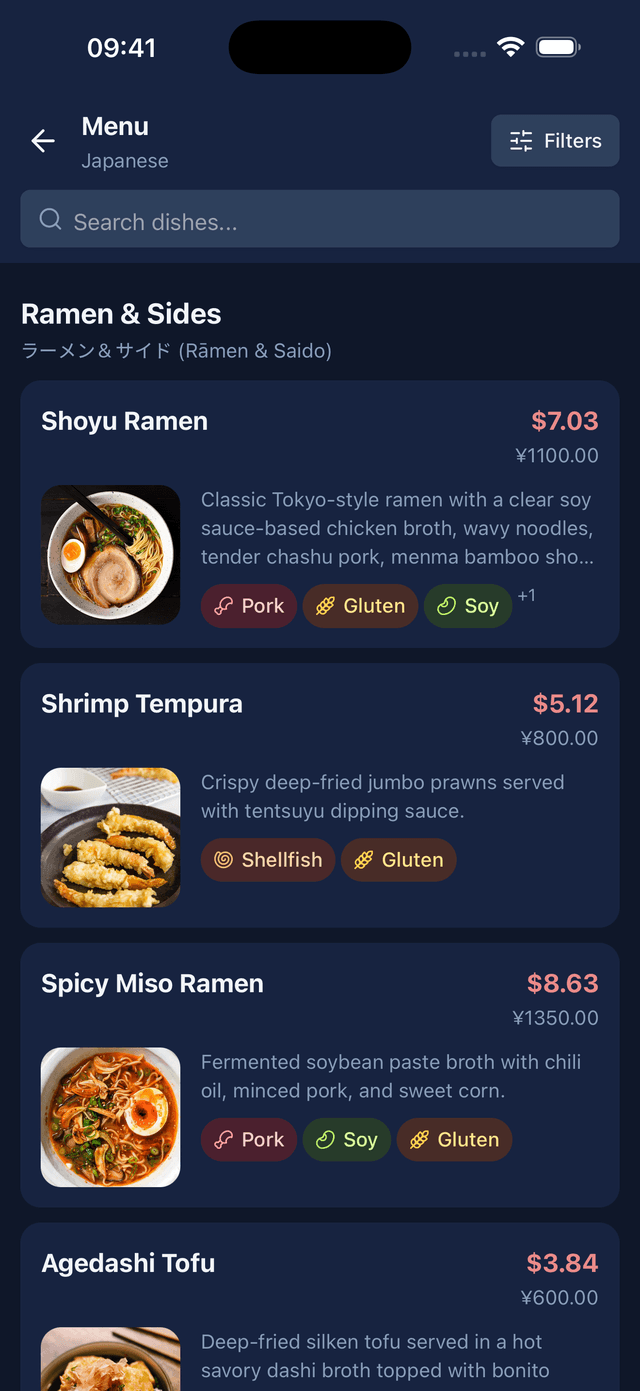
A restaurant menu opened in MenuVista, with dishes grouped under a heading and each card showing the original name, a translation, a short description and a price. The sample menu in this screenshot is Japanese, not French.
FAQ

Questions people ask

What is the difference between an entrée and a plat?
On a French menu, the entrée is the starter and the plat, or plat principal, is the main course. This is the opposite of how entrée is often used in American English.
What is a formule on a French menu?
A formule is a set of courses at one price, often two courses at lunch, such as entrée plus plat, or plat plus dessert. A menu is also often a fixed-price set, sometimes with more courses. À la carte means you order and pay for each dish separately.
Do I have to order every course?
No. A full sequence is more typical for a long meal. A formule of two courses is a normal lunch. You can also order a single plat à la carte.
Does service compris mean I should not leave anything?
Service compris means service is already included in the posted prices. You do not have to add a percentage. Some people still leave a little cash when the service was good. This is a personal choice, not a posted rate.
Can I ask for tap water?
Yes. Une carafe d'eau is a jug of tap water. You can ask for it instead of bottled water.
Is this the same as the French menu translator page?
No. The cuisine page helps you translate a French menu with the app, including dish words such as confit and tartare. This guide teaches the course names and the set-price words so you can read the structure yourself, then open the app when you want.

Related guides

Compare the apps

By cuisine

Tell a formule from à la carte

Once you can tell a formule from à la carte, and an entrée from a plat, a French menu is much less confusing. Photograph the menu in MenuVista and use Show to Waiter when you order. Free to try. No account needed.

Download on the App StoreGet it on Google Play

Free to try. No account needed.

A restaurant menu opened in MenuVista, with dishes grouped under a heading and each card showing the original name, a translation, a short description and a price. The sample menu in this screenshot is Japanese, not French.