How a Spanish dish name is built
Read a dish name from left to right. The first word is the main food. Then comes de, con or a la, and the rest tells you how it is made or what comes with it.
- Merluza a la plancha: hake cooked on a hot griddle.
- Pollo con patatas: chicken with potatoes.
- Tarta de queso: cheesecake. De means of or made with.
- Calamares a la romana: squid rings in batter, fried.
- Sopa del día: soup of the day.
Cooking words
These words tell you how the food is cooked. A word-for-word translation often gets them wrong, because each one is a specific method.
- A la plancha: cooked on a flat, very hot griddle with a little oil.
- A la parrilla or a la brasa: grilled over a flame or over coals.
- Al horno: baked or roasted in the oven.
- Asado: roast.
- Frito: fried. Rebozado means dipped in batter and fried. Empanado means breaded.
- Guisado or estofado: stewed slowly in a sauce.
- Al ajillo: cooked with a lot of garlic, often in olive oil.
- Al vapor: steamed. Crudo means raw. Casero means homemade.
Meat, fish and seafood
Meat is carne, fish is pescado and seafood is mariscos. These are the words you will see most often.
- Pollo: chicken. Cerdo: pork. Cordero: lamb.
- Ternera: veal or young beef in Spain. In Mexico, beef is usually res.
- Jamón: ham. In Spain it usually means dry-cured ham.
- Pescado del día: fish of the day. Merluza: hake. Bacalao: cod. Atún: tuna.
- Gambas or langostinos: prawns. Calamares: squid. Pulpo: octopus. Mejillones: mussels. Almejas: clams.
Sides, sauces and vegetables
Many dishes come with a side, called guarnición. If a word is not on this list, it is often a vegetable or a sauce.
- Patatas fritas: fries. Ensalada: salad. Verduras: vegetables.
- Arroz: rice. Pan: bread. Huevo: egg.
- Setas or champiñones: mushrooms. Pimientos: peppers. Cebolla: onion.
- Salsa: any sauce, not only a spicy dip. Alioli is a garlic sauce.
- Queso: cheese. Picante means spicy. Sin picante means not spicy.
Drinks and desserts
Drinks are bebidas and desserts are postres. In Spain, the drinks list is often short and written at the end of the menu.
- Agua con gas or sin gas: sparkling or still water.
- Cerveza: beer. In Spain, una caña is a small glass of draught beer.
- Vino tinto, blanco or rosado: red, white or rosé wine.
- Café solo: a small black coffee. Café con leche: coffee with milk.
- Flan: a caramel custard. Helado: ice cream. Arroz con leche: rice pudding.
Spain or Mexico: words that change
Spanish is spoken in many countries, and some food words change from one to the next. The pairs below are the ones that trip up visitors most. Spain is first, Mexico second. Reading a Mexican menu? MenuVista translates those too.
- Patatas or papas: potatoes.
- Gambas or camarones: prawns or shrimp.
- Zumo or jugo: juice.
- Tarta or pastel: cake.
- Melocotón or durazno: peach.
- Judías verdes or ejotes: green beans.
- Bocadillo or torta: a sandwich on a crusty roll. In Spain, a torta is usually a flat cake.
- Tortilla: an egg and potato omelette in Spain, a flat corn or flour bread in Mexico.
Reading a menu in Spanish with MenuVista
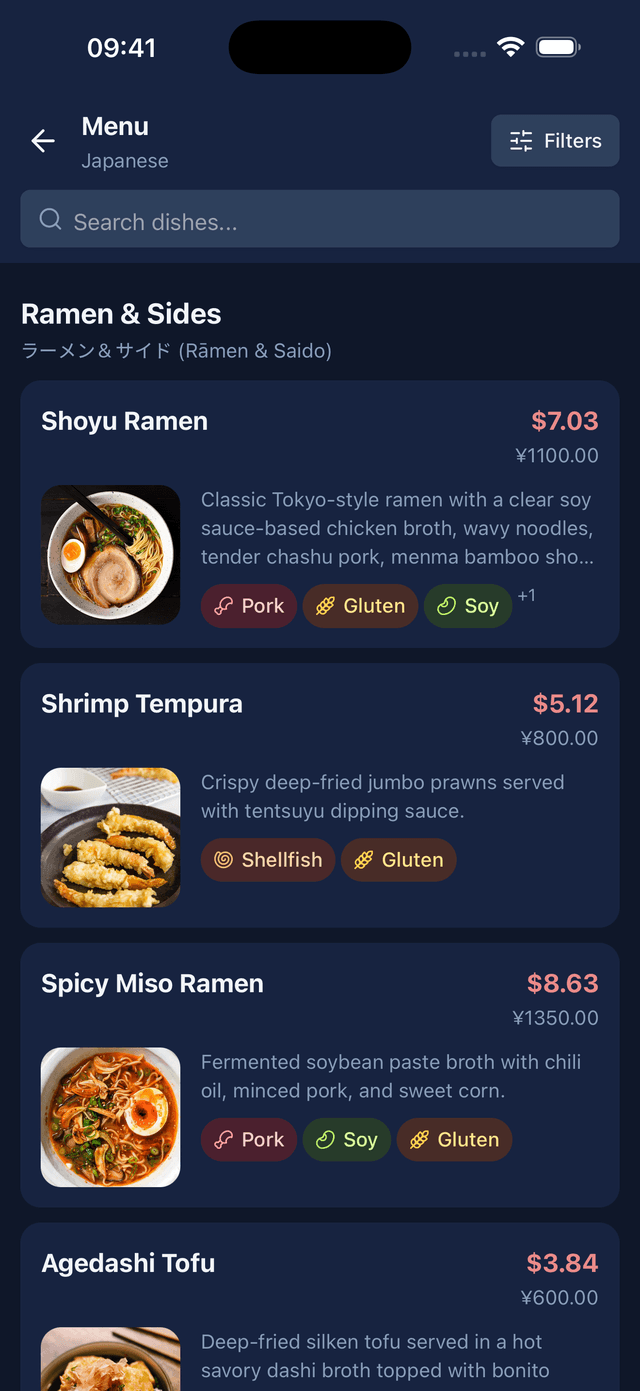
To translate a menu in Spanish, take a photo of the menu, or upload a photo or a PDF. Handwritten and chalkboard menus work too. MenuVista shows each dish with its Spanish name, a translation and a plain description of what it is, grouped under the menu's own headings. The description tells you what the dish is, which helps with words like a la plancha that a word-for-word translation gets wrong. Likely allergen flags appear on each dish for the 14 EU allergens. Free to try. No account needed.
Allergy and diet words
Learn the words for what you cannot eat, and say them to the waiter. MenuVista flags likely matches for the 14 EU allergens, but an app flag is an estimate, not a medical certificate. Always ask about each dish if you have a real allergy.
- Sin gluten: gluten-free. Vegetariano or vegano: vegetarian or vegan.
- Frutos secos: nuts. Cacahuetes in Spain, cacahuates in Mexico: peanuts.
- Leche: milk. Huevo: egg. Mariscos: shellfish and seafood.
- Soy alérgico or soy alérgica a…: I am allergic to…
- ¿Lleva…?: Does it have…? For example, ¿lleva gluten?
Words to order and pay
A few short phrases are enough. Point at the dish on your screen if you are not sure how to say it.
- La carta, por favor: the menu, please. In Spain, el menú often means the set lunch, the menú del día.
- Para mí, el pollo: the chicken for me.
- ¿Qué me recomienda?: what do you recommend?
- Tapa, media ración and ración: portion sizes, not dishes. Our tapas vs raciones guide explains them.
- La cuenta, por favor: the bill, please.