Simplified or traditional characters
Mainland China and Singapore use simplified characters. Taiwan, Hong Kong and Macau use traditional ones. The words are the same, only the shapes change: chicken is 鸡 or 雞, fish is 鱼 or 魚, noodles are 面 or 麵. This guide uses simplified characters. Many menus also print pinyin, the spelling of Chinese in Latin letters, and many have photos or dish numbers you can point at.
How a Chinese dish name is built
Read the name in parts. 青椒肉丝 (qīngjiāo ròusī) is 青椒 (green pepper), 肉 (pork) and 丝 (thin strips): pork strips stir-fried with green pepper. 宫保鸡丁 (gōngbǎo jīdīng) is 鸡 (chicken) cut into 丁 (small cubes), cooked the Gongbao way with dried chilli and peanuts. Some names are poetic and tell you nothing. 蚂蚁上树 (mǎyǐ shàng shù) means "ants climbing a tree" and is glass noodles with minced pork. If a name makes no sense word by word, it is probably one of these.
Reading a Chinese menu with MenuVista
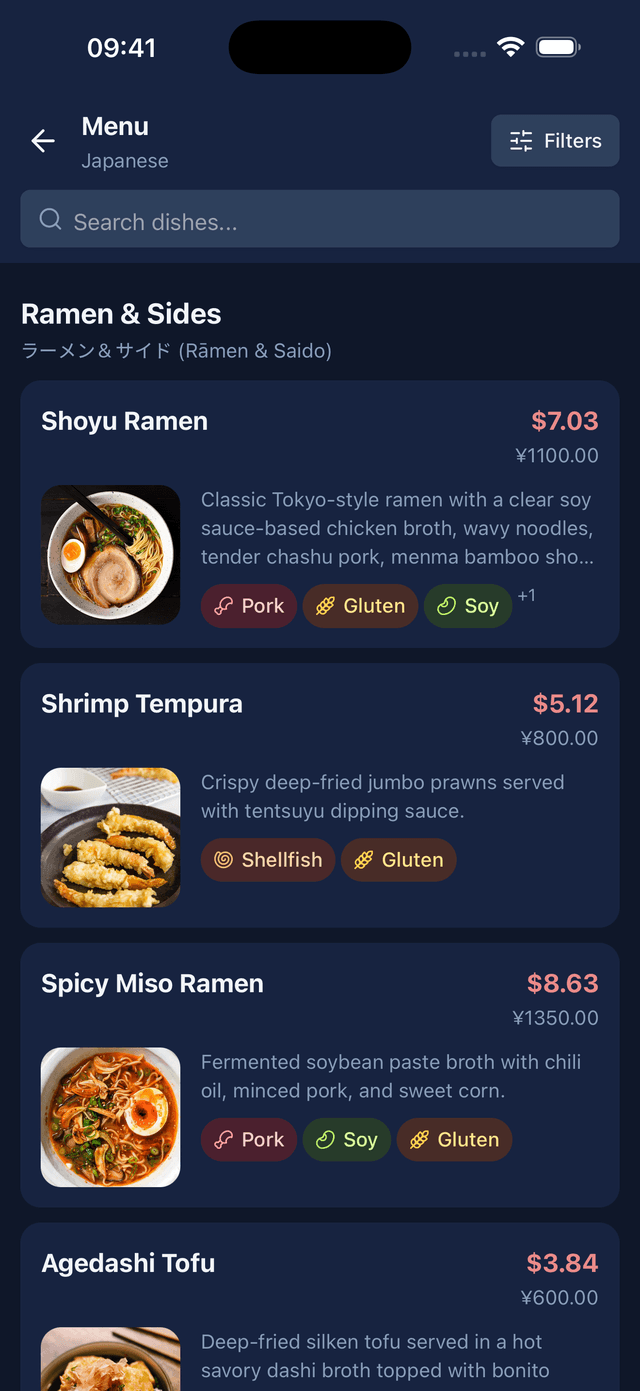
Take a photo of the menu and MenuVista lists each dish under the menu's own sections, with the Chinese name, the name in your language and a short description of what the dish is. It also flags likely allergens from the 14 EU allergens, such as peanuts, sesame, soy and gluten. This is an estimate from the menu and typical recipes, so always check with the staff. Photos, PDFs and handwritten menus work, but check the result when the writing is hard to read. When you are ready, Show to Waiter puts the dish name in Chinese on your screen, so you can just point.
Cooking method characters
These characters tell you how the food was cooked. They often come first in the name.
- 炒 (chǎo): stir-fried in a wok. 炒饭 is fried rice and 炒面 is fried noodles.
- 蒸 (zhēng): steamed. 清蒸 (qīngzhēng) means steamed simply, often a whole fish.
- 炸 (zhá): deep-fried. 干炸 (gānzhá) means fried dry, with no sauce.
- 烤 (kǎo): roasted or grilled. 烤鸭 (kǎoyā) is roast duck.
- 红烧 (hóngshāo): braised in soy sauce and sugar, so dark and a little sweet. 烧 alone can mean braised, or roasted in Cantonese dishes like 叉烧 (char siu, roast pork).
- 煮 (zhǔ): boiled or poached. But 水煮鱼 (shuǐzhǔ yú) is fish poached in a broth full of chilli oil, not plain boiled fish.
- 煎 (jiān): pan-fried in a little oil. 煎饺 (jiānjiǎo) are pan-fried dumplings.
- 炖 (dùn): slowly stewed.
- 拌 (bàn) and 凉拌 (liángbàn): mixed with a dressing and served cold.
- 干煸 (gānbiān): dry-fried until crisp, often with chilli.
Meat, fish and the 肉 rule
Learn these first. The most useful rule: when a menu just says 肉 (ròu, meat), it usually means pork. Other meats are named.
- 肉 (ròu) or 猪肉 (zhūròu): pork.
- 牛肉 (niúròu): beef. 羊肉 (yángròu): lamb or mutton.
- 鸡 (jī): chicken. 鸭 (yā): duck.
- 鱼 (yú): fish. 虾 (xiā): shrimp. 蟹 (xiè): crab.
- 豆腐 (dòufu): tofu.
- 蛋 (dàn) or 鸡蛋 (jīdàn): egg.
- 菜 (cài): vegetables, but also just "dish". 青菜 (qīngcài) are leafy greens.
Cut words: cubes, strips and slices
A character at the end of the name often tells you how the main ingredient is cut. 丁 (dīng) is small cubes, 丝 (sī) is thin strips, 片 (piàn) is slices, 块 (kuài) is chunks and 末 (mò) is minced. So 牛肉片 is sliced beef and 土豆丝 (tǔdòu sī) is shredded potato, a common stir-fry. The cut does not change the ingredient, but it helps you picture the plate.
Rice, noodles, dumplings and soup
These words tell you what fills you up.
- 饭 (fàn): rice. 米饭 (mǐfàn) is a bowl of plain rice, often ordered and paid for on its own.
- 面 (miàn): wheat noodles. 拉面 (lāmiàn) are hand-pulled noodles and 汤面 (tāngmiàn) is noodle soup.
- 粉 (fěn): rice noodles, like 米粉 (mǐfěn) or 河粉 (héfěn).
- 饺子 (jiǎozi): dumplings. 包子 (bāozi): filled steamed buns. 馄饨 (húntun): wontons.
- 汤 (tāng): soup. 粥 (zhōu): rice porridge, often for breakfast.
Flavour words and traps
Flavour words often come before the ingredient. A few of them are traps.
- 辣 (là): hot with chilli.
- 麻 (má): numbing. It comes from Sichuan pepper and makes your lips tingle. 麻辣 (málà) is both at once.
- 鱼香 (yúxiāng): "fish fragrant", a sauce of chilli, garlic, vinegar and sugar. 鱼香肉丝 is pork and usually has no fish.
- 糖醋 (tángcù): sweet and sour.
- 酸辣 (suānlà): hot and sour, like 酸辣汤 (hot and sour soup).
- 椒盐 (jiāoyán): salt and pepper, usually fried.
- 蒜蓉 (suànróng): with a lot of garlic.
- 家常 (jiācháng): home style. 招牌 (zhāopái) or 特色 (tèsè): a house specialty.
Spice levels: from 不辣 to 特辣
Many restaurants ask how hot you want a dish, or print chilli icons next to it. In Sichuan, Hunan and Chongqing, even mild can feel hot. If you want no chilli at all, say 不要辣 (bú yào là), "no chilli".
- 不辣 (bú là): not spicy.
- 微辣 (wēi là): a little spicy.
- 中辣 (zhōng là): medium.
- 特辣 (tè là): very spicy.
Prices, sizes and sharing
Dishes are usually shared. They go in the middle of the table and everyone takes some, so a common rule is one dish per person plus rice. Some dishes come in sizes: 小 (xiǎo) small, 中 (zhōng) medium and 大 (dà) large. Seafood is often marked 时价 (shíjià), market price, or priced per 斤 (jīn), a unit of 500 g in mainland China. Ask for the price before the fish is cooked.
Vegetarian food and allergies
素 (sù) means vegetarian: 素菜 (sùcài) are vegetable dishes and 我吃素 (wǒ chī sù) means "I am vegetarian". But vegetable dishes can be cooked in lard (猪油), with meat stock, oyster sauce (蚝油), dried shrimp (虾米) or a little minced pork. Peanuts (花生) and sesame (芝麻) are common, and soy sauce usually contains wheat. To say you are allergic to peanuts, show 我对花生过敏 (wǒ duì huāshēng guòmǐn). An app can flag likely allergens, but only the kitchen knows what went into the wok, so always ask. Our guide to food allergies abroad has more phrases.
Words to order and pay
A few phrases go a long way.
- 服务员 (fúwùyuán) or 你好 (nǐ hǎo): to call the staff.
- 我要这个 (wǒ yào zhège): I would like this one. Point at the menu as you say it.
- 有英文菜单吗 (yǒu yīngwén càidān ma): do you have an English menu?
- 有什么推荐 (yǒu shénme tuījiàn): what do you recommend?
- 买单 (mǎidān) or 结账 (jiézhàng): the bill, please.