Three scripts on one menu
Japanese uses three kinds of writing. Kanji are the complex characters, and they carry most of the meaning, like 牛 for beef. Hiragana are the rounder signs that link words together. Katakana are the sharper signs used mostly for foreign words. That last one is good news for you. ラーメン is rāmen, カレー is curry, ビール is beer and サラダ is salad. Read the katakana out loud, sound by sound, and you will often hear an English word.
How a dish name is built
Most names join an ingredient and a cooking word. Sometimes the cooking word comes first, as in 焼き魚 (yakizakana, grilled fish). Sometimes it comes after, as in 鶏の唐揚げ (tori no karaage, fried chicken). The small sign の (no) just links the two parts, a bit like "of". Once you spot the ingredient and the cooking word, you know what lands on the plate.
Format words: set meal, bowl or single plate
These words tell you how the food comes. You see them on menus in cafes, lunch spots and chains.
- 定食 (teishoku): a set meal. A main dish usually comes with rice, miso soup and pickles.
- 丼 (don or donburi): a bowl of rice with a topping. 牛丼 (gyūdon) is beef, 親子丼 (oyakodon) is chicken and egg, 天丼 (tendon) is tempura.
- 単品 (tanpin): the dish on its own, with no rice or soup.
- セット (setto): a set, often a main with a drink or a side.
- 日替わり (higawari): the dish of the day.
- おすすめ (osusume): recommended by the restaurant.
- おまかせ (omakase): the chef chooses for you. Common in sushi bars.
Cooking words
These are the words that tell you how the food was cooked.
- 焼き (yaki): grilled or pan fried. 焼き鳥 is grilled chicken.
- 揚げ (age) and 唐揚げ (karaage): deep fried.
- 天ぷら (tempura): fried in a light batter.
- 煮 (ni) and 煮物 (nimono): simmered in a broth.
- 蒸し (mushi): steamed.
- 炒め (itame): stir fried.
- 生 (nama): raw or fresh. 生ビール (nama bīru) is draft beer.
- 刺身 (sashimi): slices of raw fish.
Meat, fish and other ingredients
Learn these kanji first. They show up again and again.
- 牛 (gyū): beef.
- 豚 (buta, or ton in words like とんかつ): pork.
- 鶏 (tori): chicken.
- 肉 (niku): meat.
- 魚 (sakana): fish.
- 海老 or エビ (ebi): shrimp.
- 卵 or 玉子 (tamago): egg.
- 豆腐 (tōfu): tofu.
- 野菜 (yasai): vegetables.
Menu sections
In an izakaya (a Japanese pub that serves small plates), sections often end in 物 (mono), which means "things". 焼き物 (yakimono) are grilled dishes, 揚げ物 (agemono) are fried dishes and 煮物 (nimono) are simmered dishes. 飲み物 (nomimono) are drinks. 麺類 (menrui) means noodles, and ご飯もの (gohanmono) means rice dishes. A section called 〆 (shime) lists dishes to close the meal, like rice or noodles.
Prices and sizes
Prices are in yen, written 円 or ¥. Look for a small note next to the price.
- 税込 (zeikomi): tax included.
- 税抜 or 税別 (zeinuki, zeibetsu): tax not included, so you pay a bit more.
- 時価 (jika): market price. Ask before you order.
- 並 (nami): regular size. 大盛り (ōmori): large size.
- おかわり (okawari): a refill or second helping. Some places include it, so ask.
Izakaya words
At many izakaya a small dish arrives before you order. It is called お通し (otōshi), and it is usually added to the bill for each person, like a table charge. 飲み放題 (nomihōdai) means all you can drink for a set time, and 食べ放題 (tabehōdai) means all you can eat. L.O. on a menu means last order.
Ramen and sushi words
Ramen shops often name the broth first: 醤油 (shōyu) is soy sauce, 味噌 (miso) is fermented soybean paste, 塩 (shio) is salt and 豚骨 (tonkotsu) is a rich pork bone broth. 替え玉 (kaedama) is an extra serving of noodles for your leftover soup. Some ramen and rice bowl shops ask you to buy a ticket, called 食券 (shokken), at a machine by the door. At a sushi bar, 握り (nigiri) is fish on rice, 巻き (maki) is a roll, and 盛り合わせ (moriawase) is a mixed plate. さび抜き (sabinuki) means without wasabi.
Eating vegetarian with a Japanese menu
Watch out for 出汁 (dashi). It is the stock behind miso soup, many noodle broths and simmered dishes, and it is often made with bonito, a dried fish. So a dish with only vegetables on the plate can still contain fish. Look for 精進料理 (shōjin ryōri), the Buddhist vegetarian cooking served at some temples, and read our guide to eating vegetarian abroad for phrases you can show.
Words to order and pay
A few phrases go a long way.
- すみません (sumimasen): excuse me. Use it to call the staff.
- これをください (kore o kudasai): this one, please. Point at the menu as you say it.
- おすすめは何ですか (osusume wa nan desu ka): what do you recommend?
- 英語のメニューはありますか (eigo no menyū wa arimasu ka): do you have an English menu?
- お会計お願いします (okaikei onegaishimasu): the bill, please.
Reading a Japanese menu with MenuVista
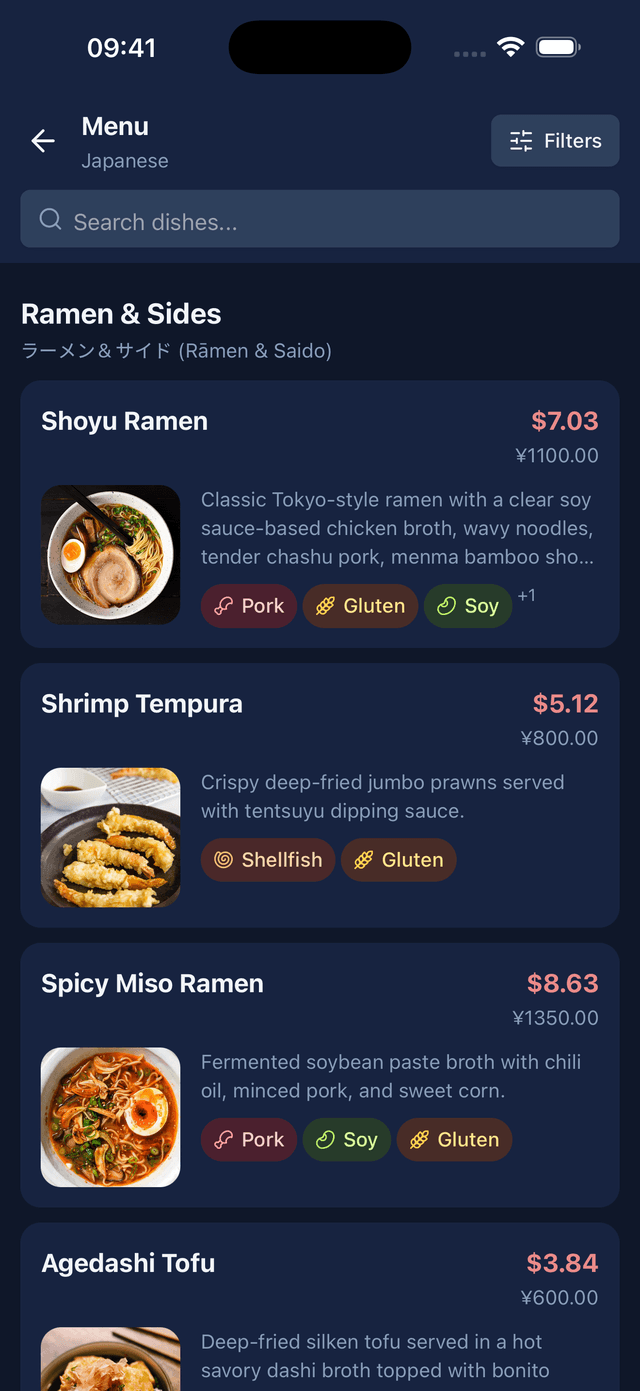
Take a photo of the menu and MenuVista lists each dish under the menu's own sections. For every dish you see the Japanese name, how to say it in Latin letters, the name in your language and a short description. Likely allergens are flagged, so fish in a bonito broth is easier to spot, but always check with the staff. Prices can be shown in your own currency. When you are ready, Show to Waiter puts the dish name in Japanese on your screen, so you can just point.